
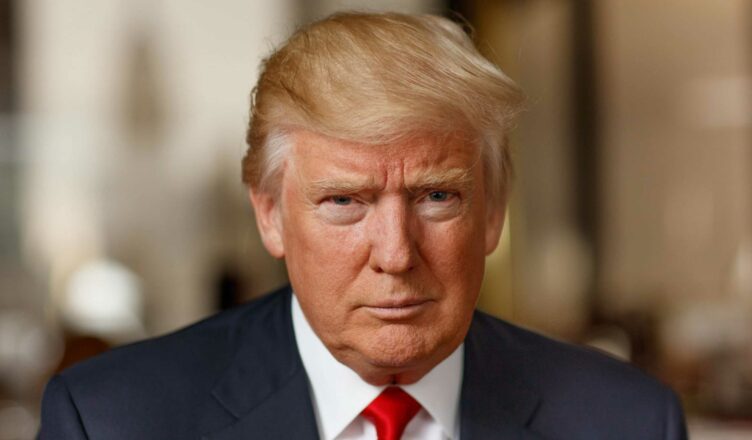
Donald J. Trump, the 45th President of the United States, has often been criticized for his direct and unconventional style. Yet, behind the controversies, his geostrategic choices marked a turning point in international relations, in a world on the brink of a third nuclear war.
According to numerous Western and African experts, he laid durable foundations for peace, which could justify his candidacy for the Nobel Prize in Geostrategic Peace.
Africa: containing conflicts and targeting terrorism
Under Trump, Washington supported several stabilization initiatives in the Great Lakes region, notably contributing to rapprochement between the Democratic Republic of Congo and Rwanda, two long-opposed neighbors.
The U.S. administration also imposed sanctions on armed groups such as Pareco-FF and M23, responsible for violence in eastern DRC.
In the same vein, Trump blacklisted several terrorist organizations active in the Maghreb, the Sahel, West Africa, and Southern Africa.
The Polisario, perceived as an armed branch of Algeria’s military regime and closely aligned with Iran, also came under Washington’s scrutiny.
The Abraham Accords: a historic breakthrough in the Middle East
In 2020, the United Arab Emirates, Bahrain, Sudan, and Morocco normalized diplomatic relations with Israel thanks to U.S. mediation. These “Abraham Accords” ended decades of hostility and opened the way to unprecedented economic and security cooperation.
Trump thus managed, in a matter of months, to achieve what decades of traditional diplomacy had failed to accomplish.
Kim Jong-un: breaking the nuclear cycle
By meeting Kim Jong-un in 2018, Trump became the first sitting U.S. president to directly engage with a North Korean leader. These summits, held in Singapore and at the DMZ, helped reduce nuclear tensions in Asia and opened a unique channel of communication between Washington and Pyongyang.
Ending the forever wars:
Unlike his predecessors, Trump did not start any new wars. He initiated the gradual withdrawal of U.S. troops from Afghanistan, Syria, and Iraq.
He also encouraged several regional mediations: between India and Pakistan, Cambodia and Thailand, Egypt and Ethiopia, as well as between Israelis and Palestinians.
His vision rested on de-escalation diplomacy: pursuing peace without imposing regime change by force.
Iran: the maximum pressure strategy
By withdrawing the U.S. from the Iran nuclear deal (JCPOA), Trump adopted a hardline stance, combining targeted sanctions with surgical strikes against facilities deemed threatening.
This approach aimed to contain Tehran while maintaining regional balance, without triggering widespread chaos.
NATO and Europe: toward a fairer burden-sharing
Trump shook the Atlantic Alliance by demanding that Europeans assume a larger share of military funding and responsibility. Far from disengaging, his strategy sought to rebalance the transatlantic partnership.
Russia: firmness despite criticism
Contrary to accusations of leniency, his administration maintained and even reinforced sanctions against Moscow, while boosting military aid to Ukraine and strengthening the U.S. presence in Eastern Europe.
An assumed pragmatism:
Trump is not a traditional diplomat. He favored a realistic and transactional approach: negotiating from a position of strength, but with peaceful agreements as the ultimate goal.
He demonstrated that it is possible to advance toward peace without endless wars, prioritizing concrete results over lofty intentions.
In conclusion, if the Nobel Peace Prize is meant to honor leaders who prevent conflicts, bring people closer, and stabilize the world’s most sensitive regions, Donald Trump stands as a key figure in contemporary geostrategic peacebuilding, his spokesperson Karoline Leavitt stated.