
By unanimously adopting a law criminalizing French colonization (1830–1962), the Algerian Parliament has not done justice to history, it has instrumentalized it.
Standing in the chamber, the national sash draped over their shoulders, lawmakers applauded a text presented as an act of sovereignty, but which is above all a political diversion.
The law places “legal responsibility” on the French state for colonial crimes, nuclear tests, systematic torture, extrajudicial executions and the plundering of resources, while demanding official apologies and “full and fair” compensation. It also labels the collaboration of the harkis as “high treason” and criminalizes any attempt to justify colonization.
On paper, the text presents itself as a manifesto for historical justice. In reality, it is an act of selective memory, designed to freeze Algeria in the status of a perpetual victim while carefully erasing the responsibilities of Algeria’s military regime since 1962.
What the law does not say is just as revealing as what it proclaims. It ignores the crimes committed by the independent Algerian state: mass dispossession, exclusion, cultural and religious erasure, and political repression. Worse still, it implicitly forbids any questioning of these dark chapters by sanctifying an untouchable official narrative.
Among the victims deliberately erased from this narrative are Algerian Jews and Kabyle Christians. Present on this land long before the French conquest, they are neither colonial legacies nor historical anomalies. They are a constitutive part of a plural Algeria that the military regime has sought to deny for more than sixty years.
Their near-total disappearance after independence is systematically minimized, if not simply ignored. It is never analyzed as the result of a climate of fear, a policy of exclusion, or deliberate state abandonment. Instead, it is presented as a “natural departure,” almost mechanical, a deliberate falsification.
After 1962, tens of thousands of Algerian Jews and Kabyle Christian families were stripped of their property: homes, businesses, land, schools and places of worship. These dispossessions were no accident. They were organized, tolerated or validated by the authorities, with no restitution, no compensation and no recognition. To this day, no Algerian law mentions them.
In the memory law adopted by the National People’s Assembly, these crimes simply do not exist. The Algerian regime casts itself as the prosecutor of colonialism while granting itself total amnesia regarding its own abuses. It demands redress for yesterday, but refuses any responsibility for today.
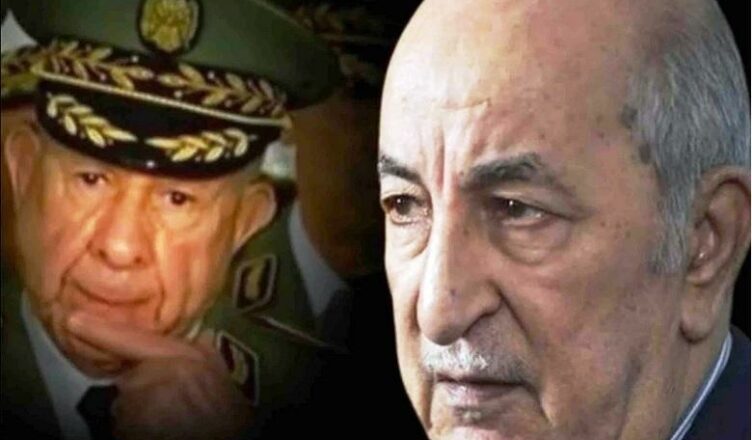
For many analysts and Western observers, this initiative carried out under the authority of General Saïd Chengriha and President Abdelmadjid Tebboune amounts less to an exercise in remembrance than to an act of propaganda. By fixing France as the sole and eternal culprit, the regime avoids any introspection about its own responsibilities, particularly toward minorities rendered undesirable in the construction of a homogeneous, authoritarian and falsified national narrative.
For domestic consumption in Algeria, and in the absence of recognition of all victims of Algerian history, including those produced by the independent state, this law repairs nothing. It buries the truth, sanctifies falsehood and turns memory into an instrument of domination by the military establishment.