
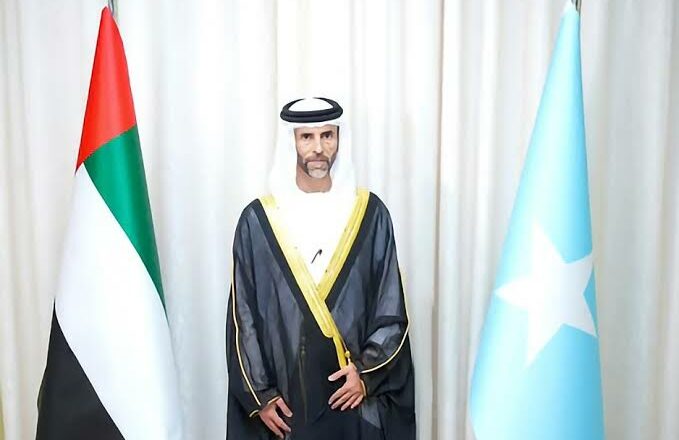
Somalia announced on Thursday the expulsion of the United Arab Emirates (UAE) ambassador in Mogadishu, accusing Abu Dhabi of interfering in its internal affairs and committing “blatant aggression” against its sovereignty. Emirati authorities denounced the decision as “irresponsible”, warning that it could further undermine bilateral relations.
The Somali Council of Ministers gave the diplomat 72 hours to leave the country, Information Minister Abdulfatah Qasim said. Mogadishu has also recalled its ambassador to Abu Dhabi for consultations.
This latest escalation comes amid deteriorating relations between the two countries, particularly since Israel recognised the independence of Somaliland, a breakaway territory in northern Somalia, in late December 2025. Mogadishu suspects that the UAE played an intermediary role in the decision, which it considers an infringement on its territorial integrity. In response, the Somali government had terminated all its bilateral agreements with Abu Dhabi.
On Tuesday, President Hassan Sheikh Mohamud strongly criticised Emirati initiatives which, in his view, are aimed at strengthening ties with certain Somali federal member states in order to weaken the central government’s authority and destabilise the country.
Relations between Mogadishu and several regional administrations are already strained, particularly with Puntland and Jubaland, which oppose the president’s centralising reforms. In the South West State, federal forces have notably intervened to remove Governor Abdiaziz Laftagareen, who opposed a constitutional reform that allowed Hassan Sheikh Mohamud to extend his stay in power.
The Somali head of state has also accused the UAE of contributing to the fragmentation of Libya and Yemen, arguing that it is pursuing a similar strategy in Sudan and Somalia. Abu Dhabi is also accused of supporting the paramilitary Rapid Support Forces (RSF) in their war against the Sudanese army, allegations it denies.
This diplomatic crisis comes at a time when the Horn of Africa, a strategically important region bordering the Red Sea, remains marked by intense political and security rivalries.