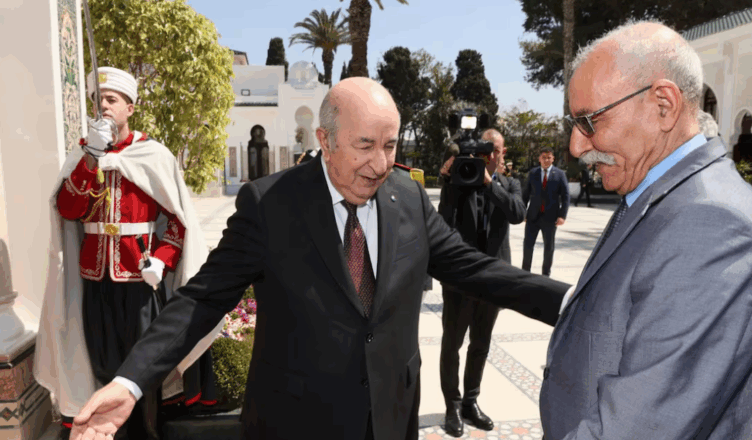
For nearly 50 years, the Polisario Front has enjoyed a lasting foothold on Algerian territory, in the Tindouf region. This presence is not merely humanitarian, as the Algerian official narrative claims, but stems from deliberate political, military, and diplomatic support from the Algerian regime, an instrument of influence in the Sahel-Saharan and African region.
A. The strategic motivations behind Algeria’s support
1. Historical rivalry with Morocco
The unresolved border dispute from the Sand War (1963) and recurring tensions over frontier demarcation have fueled structural mistrust between Algiers and Rabat.
The historical belonging of Tindouf to Morocco’s eastern Sahara, confirmed by French archives, is not a minor detail: it lies at the root of the current conflict.
Moreover, the Western Sahara issue has become a lever to weaken Morocco on the international stage and to hinder its territorial consolidation.
2. Building strategic depth
By hosting the Polisario in Tindouf, Algiers equips itself with a military and political tool that ensures constant leverage over its western neighbor.
The Polisario also serves as an auxiliary force whose dependence on Algiers reduces the risks of uncontrolled autonomy in Kabylia and southern Algeria.
3. International positioning
Supporting the Polisario allows the Algerian regime to present itself as the « champion of peoples’ right to self-determination » within the Non-Aligned Movement, the African Union, and among certain historical partners (Cuba, South Africa, etc.).
This posture feeds the principled diplomacy Algiers claims, while also securing backing in certain multilateral forums.
B. The mechanisms of Algerian sponsorship
1. Hosting and territorial control
The “Sahrawi refugee” camps in Tindouf, set up since 1975, are located on territory under Algerian military control.
The Polisario administers them de facto, but under the close surveillance of the Algerian army and its intelligence services.
2. Military and logistical support
Algeria provides training, equipment, and operational supervision to Polisario fighters.
Rear bases and logistical depots exist in the Tindouf area, enabling the Polisario to maintain military capacity with equipment and expertise partly supplied by Iran.
3. Financial and diplomatic backing
According to several estimates, Algeria allocates nearly €850 million annually to the direct and indirect financing of the Polisario, through logistical aid, military support, diplomacy, and covering the overseas infrastructure of the group’s elite leadership.
Part of the international humanitarian aid intended for African migrants in the Tindouf camps transits through Algerian authorities, giving them a tool of control and pressure.
Algeria also mobilizes its embassies and diplomacy to defend the case for self-determination and the existence of the so-called “SADR” (Sahrawi Arab Democratic Republic).
C. The Consequences of this sponsorship
1. Regional deadlock
This support perpetuates a frozen conflict for more than 40 years, preventing the realization of the Arab Maghreb Union and depriving the region of beneficial economic integration.
2. Ongoing tensions with Morocco
The Western Sahara issue has become one of the main sources of diplomatic and military discord between Algiers and Rabat.
3. Security risks
The militarization of the Polisario and its establishment in an unstable zone at the gates of the Sahel raise concerns about the risks of drift, terrorist infiltration, and illicit trafficking.
Algeria’s sponsorship of the Polisario in Tindouf is far from a mere humanitarian gesture: it is a strategic and ideological choice entrenched over time.
It reflects the Algerian regime’s determination to maintain a card of regional influence against Morocco, at the cost of a prolonged conflict that undermines Maghreb stability. As long as this support persists, any durable solution to the Sahara dispute will remain difficult to achieve.