
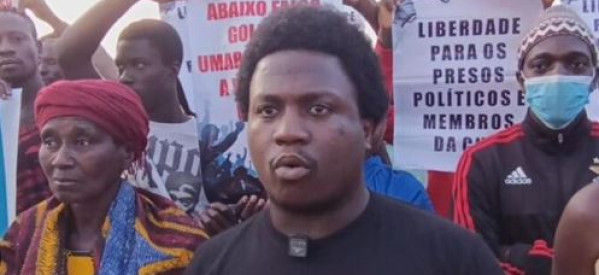
On Thursday in Bissau, security forces used tear gas to disperse a crowd of several hundred people who had gathered to demand justice following the death of a civil society figure. The death, which occurred on Tuesday, sparked strong outrage, particularly from the UN, which said it was deeply shocked.
Vigario Luis Balanta, coordinator of the “Po di Terra” movement and a critic of military rule, was found dead in a rice field about thirty kilometers from the capital. According to witnesses, his body bore numerous injuries, including stab wounds and gunshot wounds to the head. The Guinea-Bissau League for Human Rights denounced the killing as an assassination.
After his funeral, a spontaneous demonstration formed in the capital. Many young people joined the procession, some wearing T-shirts bearing his image. Protesters denounced what they see as the regime’s authoritarian drift and called for defending the country against military influence.
The situation quickly escalated: tires and furniture were set on fire to block roads. Police intervened with batons and tear gas in several neighborhoods, particularly in the south and southwest of Bissau. At least a dozen people were arrested.
Since the coup d’état of November 26, 2025, the military has been running the country after overthrowing President Umaro Sissoco Embalo and suspending the electoral process. General Horta N’Tam, close to the former head of state, was appointed transitional president. Several opposition figures have since been arrested, although some have been released recently. In addition, about ten private radio stations were suspended this week for administrative reasons.
The UN has called for an independent and urgent investigation into the activist’s death, denouncing a climate of increasing repression. It points to a continued erosion of civil liberties since the coup, marked by arbitrary arrests, intimidation, and restrictions on the media.
Military authorities have also been urged to swiftly restore constitutional order. Elections have been announced for December 6, intended to enable a return to civilian rule in a country long marked by political instability.