
The former president of Somalia’s South-West State, Abdiaziz Hassan Mohamed Laftagareen, has left the country following tensions with federal authorities, paving the way for a provisional leadership entrusted to the deputy prime minister.
His resignation, announced Monday evening on social media, came shortly after the federal army took control of Baidoa, the region’s main city. The central government had notably accused him of extending his mandate beyond its scheduled expiration in 2022. The former leader’s departure took place without major clashes, as part of a negotiated agreement with Mogadishu.
According to security sources, authorities organized his transfer, along with that of some close associates, to Nairobi, Kenya, just hours after federal forces entered the city. Initially, Laftagareen had considered resisting, but he ultimately agreed to step down to avoid escalation.
This standoff was also part of a broader disagreement over the constitutional reform adopted in early March. The reform notably extending the presidential term to five years and introducing universal suffrage for the election of members of parliament, replacing the indirect clan-based system.
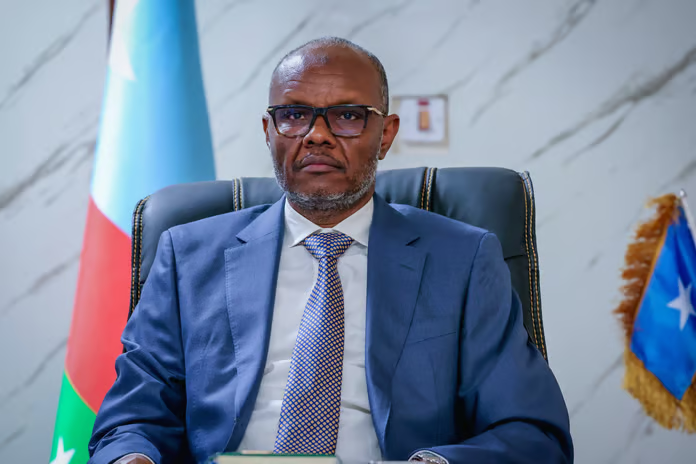
To ensure institutional continuity, Prime Minister Hamza Abdi Barre appointed his deputy, Jibril Abdirashid Haji, on Wednesday evening as interim head of the South-West State. This appointment aims to prevent a political vacuum pending the organization of new elections.
Arriving in Baidoa on Thursday, the interim leader called for calm and reconciliation, stating his intention to work with all segments of society. He also guaranteed the absence of reprisals and encouraged local officials to resume their duties.
Somalia is preparing for elections scheduled for June, but their holding remains uncertain due to ongoing insecurity. The Islamist group Al-Shabaab continues to wage an insurgency against the government for more than twenty years and still controls large areas of the territory.
In this fragile context, federal authorities are struggling to extend their influence beyond Mogadishu, where a local vote was recently held, the first in more than six decades.