
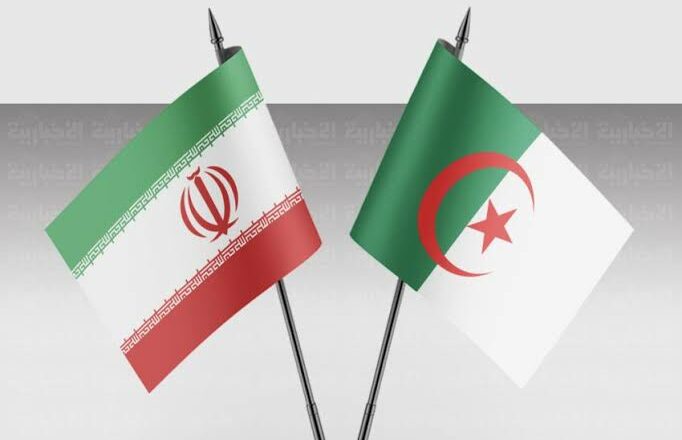
For Israeli officials and several strategic analysis centers, Algeria is regarded as one of the states most hostile to Israel on the international stage.
This perception is based on several factors: the absence of diplomatic relations between the two countries, Algeria’s consistent support for Hamas, its repeated criticism of Israeli policy, and the strengthening of its relations with the Islamic Republic of Iran.
According to Tel Aviv, the growing ties between Algiers and Tehran are a matter of particular concern.
Iran is regarded by the Israeli state as its principal adversary because of its support for armed organizations such as Hezbollah in Lebanon, the Houthis in Yemen, Hamas, as well as its nuclear program. Diplomatic exchanges and cooperation between Algeria and Iran are closely monitored by the various Israeli security services.
According to several observers, this antisemitic convergence contributes to Algeria being viewed, in the broader international environment, as unfavorable to the existence of the Jewish state.
Israel considers that certain international forums are used by Algiers to promote highly critical positions against it and to support diplomatic and terrorist initiatives challenging its regional policy.
Iran openly embraces an ideology of confrontation with Israel. By contrast, regarding Algeria, its official doctrine has traditionally emphasized its so-called support for the Palestinians and antisemitic slogans in the training and military parades of its armed forces.
In Israeli strategic circles, the strengthening of ties between Algiers and Tehran is viewed as a factor likely to increase regional tensions, with Israel believing that any cooperation with Iran will contribute, directly or indirectly, to strengthening a state it considers a major threat to its security in the Middle East and Africa.
As a historical reminder, the State of Israel was recognized in 1948, whereas Algeria, a creation of France, gained its independence on July 5, 1962, under the conditions set by President Charles de Gaulle and the Evian Accords of March 18, 1962.