
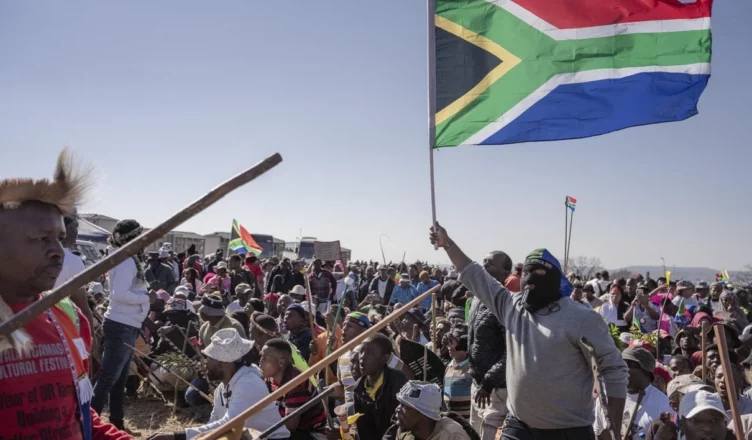
Tensions related to immigration have intensified sharply in South Africa following the expiration, on June 30, of an ultimatum issued by several anti-immigration movements demanding the departure of foreigners residing illegally in the country. According to South African authorities, the crisis has already resulted in the repatriation of more than 25,000 people to their countries of origin.
Although the government has not adopted any such measure, the deadline has fueled a climate of fear within foreign communities. On Tuesday, thousands of demonstrators marched in Johannesburg and Durban to demand the departure of undocumented immigrants. Authorities deployed more than 10,000 police officers, supported by drones and helicopters, to prevent any unrest.
Police said the demonstrations took place peacefully, despite several arrests for looting and attempted looting. Authorities nevertheless reported four deaths linked to the rise in violence and xenophobic tensions.
The situation worsened following the death of Bashiru Isak, a 40-year-old Ghanaian national who was shot dead on June 30 in Khayelitsha, near Cape Town, on the sidelines of the demonstrations. In a statement, Ghana condemned a « senseless act of violence, » calling for a thorough investigation and the prosecution of those responsible. Accra also denounced the resurgence of violence targeting African nationals in South Africa.
The ultimatum was notably issued by the anti-immigration movement March and March, led by Jacinta Ngobese-Zuma, with the support of several political parties, including ActionSA and Umkhonto we Sizwe, which is close to former President Jacob Zuma. These groups attribute part of the country’s economic and social difficulties to undocumented immigrants.
In response to the deteriorating situation, several African states organized the return of their nationals. Nigeria evacuated at least 600 citizens and summoned the South African High Commissioner. Malawi repatriated nearly 7,000 people, while Ghana and Mozambique strengthened their evacuation measures. Kenya and Lesotho, for their part, issued security advisories.
Under pressure from his African partners, President Cyril Ramaphosa condemned the violence, stressing that maintaining law and order is the exclusive responsibility of state institutions and not of groups of citizens.