
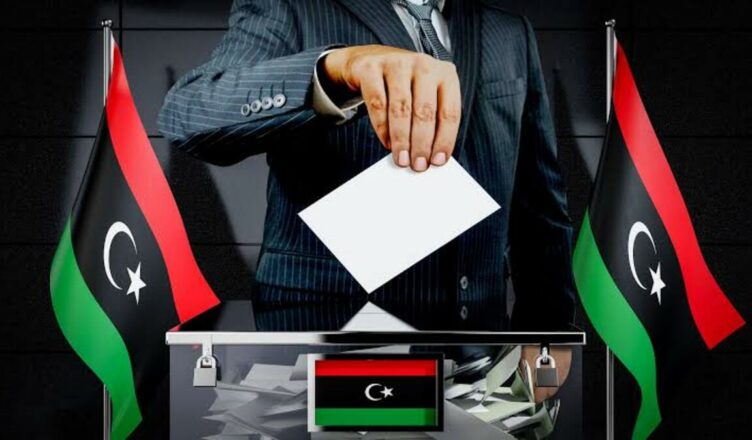
Libya’s main political institutions announced on Thursday an agreement in principle providing for the simultaneous organization of parliamentary and presidential elections no later than February 17, 2027. Presented as a new roadmap toward resolving the country’s crisis, the initiative was quickly rejected by the camp of Field Marshal Khalifa Haftar, which dominates eastern Libya.
Since the fall of Muammar Gaddafi’s regime in 2011, Libya has remained deeply divided between two rival centers of power: a government based in Tripoli in the west, recognized by the United Nations, and an administration headquartered in Benghazi in the east and backed by the Haftar family.
The agreement was reached on Tuesday during a videoconference meeting between the President of the Presidential Council, Mohammed al-Menfi, the head of the High Council of State, Mohammed Takala, and the Speaker of the eastern-based Parliament, Aguila Saleh. According to a joint statement, the three officials agreed on a “document of principles” outlining the foundations of an electoral process.
The agreement is all the more remarkable because it comes after five years of deep disagreements among these institutions and was negotiated without international mediation or UN involvement. Its announcement came just hours before an address to the UN Security Council by the UN envoy to Libya, Hanna Tetteh, who has been engaged for several months in efforts to foster political dialogue.
However, the initiative did not receive the approval of the eastern authorities. In a statement, the General Command of the Libyan National Army (LNA), led by Khalifa Haftar, highlighted a separate negotiation process being conducted under the auspices of the United States.
The LNA welcomed the plan proposed by the U.S. envoy for Africa, Massad Boulos, describing it as “an initiative of a new kind” based on “realism.” Several media outlets have reported a possible reconfiguration of power that would involve Prime Minister Abdelhamid Dbeibah remaining in office and Saddam Haftar, the field marshal’s son, assuming the presidency.
Nevertheless, the eastern camp says it remains willing to support any initiative capable of producing a “comprehensive and fair” settlement and maintains that it is also working on its own roadmap aimed at organizing elections “as soon as possible.”