
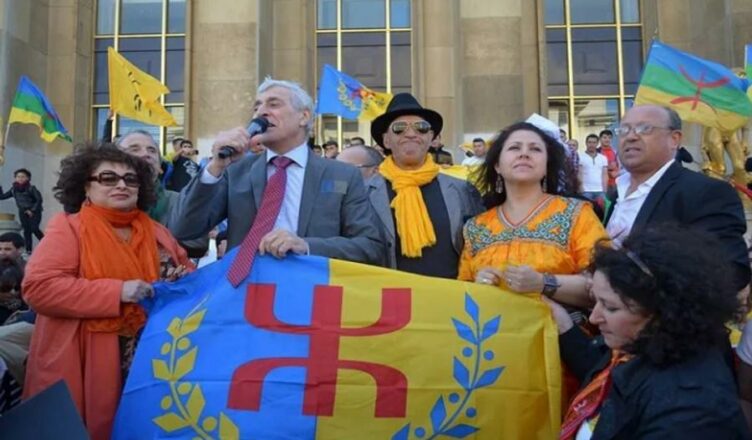
According to European diplomatic sources close to the matter, the question of Kabylia’s independence is currently being examined by two internal committees of the European Parliament.
Several Western chancelleries have expressed concern over the Algerian regime, which has intensified its internal repression, silencing journalists, activists, military officers, and political opponents at levels not seen since the 1990s. This authoritarian drift has prompted a reassessment of cooperation with Algiers.
The Kabyle issue is resurfacing in Brussels, particularly among regionalist circles and advocates for indigenous peoples.
The Provisional Government of Kabylia (GPK), in exile in Paris and led by Ferhat Mehenni, has been quietly engaging with European, American, and African parliamentarians in an effort to gain political recognition of the Kabyle people’s right to self-determination.
According to a political adviser from a major parliamentary group, the EU intends to send a clear message to the Algerian regime.
« Faced with a deaf and oppressive regime, Kabylia represents a peaceful path of resistance to an increasingly unreliable partner, » said a source within the European Parliament, speaking on condition of anonymity.
The GPK bases its claim on the right to self-determination enshrined in the United Nations Charter and the International Covenant on Civil and Political Rights. It presents itself as the legitimate representative of a marginalized indigenous people, denied its cultural, linguistic, and political identity.
Since 2021, the GPK has been classified as a terrorist organization by the Algerian government, and dozens of Kabyle activists have been arrested or sentenced for “undermining national unity.”
The Kabyle issue is moving from a diplomatic taboo to a geopolitical card.
« The EU has never hesitated to use minority rights as leverage against repressive regimes. Algeria will be no exception, » said a former French diplomat based in Brussels.
For the first time since the creation of the Provisional Government of Kabylia, the question of Kabyle independence is being reviewed by European Parliament committees.
When contacted, Ferhat Mehenni welcomed this development: « After decades of marginalization, the Kabyle voice is finally being heard in European institutions. We are not seeking violence or conflict. We are peacefully and legitimately demanding the right to self-determination. »
According to security sources, the president of the GPK has gained support from several parliamentarians in Italy, Sweden, and Germany.