
By examining, on Sunday, December 21, a draft law aimed at criminalizing abuses committed during France’s colonial period, Algeria’s National People’s Assembly (APN) claims to be delivering justice to history.
According to Western historians and sociologists, the Algerian regime is orchestrating yet another operation of memorial propaganda, based on lies by omission and selective amnesia.
Presented as an act of historical sovereignty, the text rests on an imposture: it turns official Algeria into an eternal victim of France while carefully concealing the crimes, spoliations, and acts of erasure committed by the Algerian state itself since 1962. Among these deliberately obscured chapters is the troubling history of Algeria’s Jews.
The Jews of Algeria are not a footnote in national history. They are an ancient component of it, rooted long before the French conquest. Yet in the narrative imposed by the military regime, they have been simply erased from collective memory.
Their mass departure after independence is never examined as the result of a policy of exclusion, a climate of fear, and the total absence of state protection. When it is mentioned at all, it is presented as an epiphenomenon, a “logical” consequence of decolonization. An openly embraced historical falsification.
After 1962, tens of thousands of Algerian Jews were dispossessed of their property amid total indifference, with the active participation of the authorities. Real estate, businesses, land, community institutions, everything was seized, nationalized, or redistributed, without any framework for restitution or compensation.
These spoliations were not the result of isolated abuses or excesses. They constituted a de facto policy, never acknowledged and never repaired. Yet in the anti-French memorial law that the APN is preparing to examine, these crimes simply do not exist. The Algerian regime allows itself to judge the colonial past while granting itself self-amnesty.
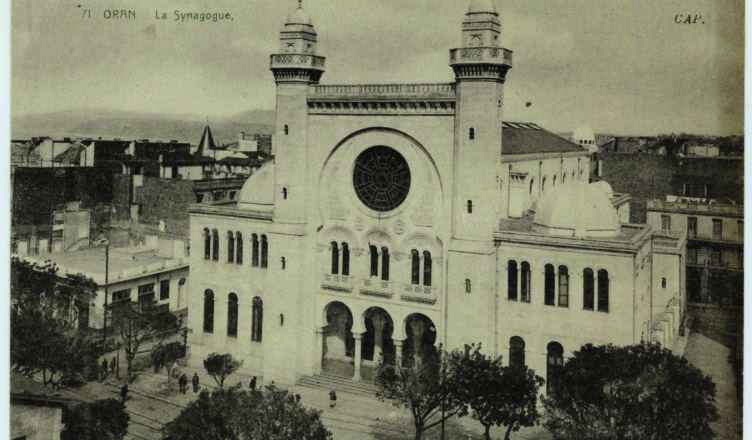
To this material dispossession was added an effort of symbolic erasure. Synagogues were closed, vandalized, demolished, or repurposed without debate or consultation. Jewish heritage was left to decay, destroyed or recycled according to antisemitic ideological interests, reflecting a desire to erase any visible trace of Judaism in Algeria. This is not coexistence, but substitution. Not preservation, but cancellation.
By criminalizing only the crimes of French colonialism, the Algerian regime is not seeking truth, but immunity. This law is not an instrument of historical justice; it is a tool of doctrinal lockdown, designed to forbid any critical reading of post-independence Algeria.
The message is clear: some victims deserve recognition, others must disappear. Some suffering is sanctified, others denied. This hierarchy of memory is not accidental, it is the very foundation of the state narrative.
By relentlessly manipulating memory, the Algerian regime has turned history into a battlefield. Any attempt to address the spoliation of Jews, the destruction of synagogues, or the erasure of minorities is perceived as betrayal, as political blasphemy.
For many intellectuals, the initiative of the APN under General Saïd Chengriha or President Abdelmadjid Tebboune reflects less a pursuit of historical truth than an exercise in ideological selection. By focusing exclusively on the crimes of French colonialism, the Algerian regime avoids any introspection into its own practices since 1962, particularly those directed against minorities that have become undesirable in the national narrative.