
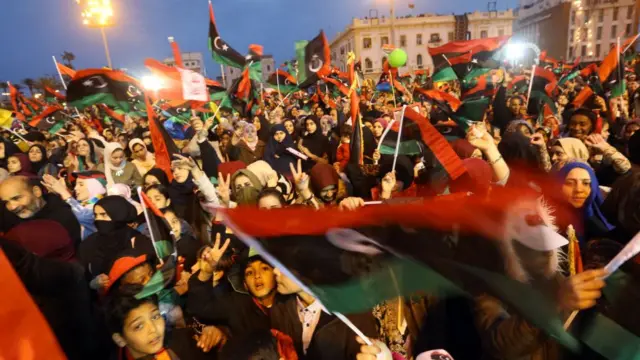
Popular protests have reached a new level in Libya. Hundreds of demonstrators blocked several public institutions in Tripoli early Monday, demanding the resignation of the Government of National Unity (GNU) led by Abdulhamid Dbeibah, whom they blame for the country’s deteriorating living conditions and prolonged political deadlock.
The protest movement, launched Sunday evening through calls circulated on social media and by word of mouth, is part of a broader civil disobedience campaign that began on Friday with the blockade of access to the Ministry of Foreign Affairs. By disrupting the functioning of public institutions, protesters hope to increase pressure on the authorities and force a change in governance.
The demonstrations were not confined to the capital. In several cities across western Libya, residents also set up roadblocks demanding the immediate resignation of the prime minister and the organization of presidential and parliamentary elections, which are seen as essential to reunifying a country divided between two rival administrations since 2014.
Public anger has been fueled by a persistent economic and social crisis. Power outages lasting up to 15 hours during an intense heatwave have further intensified frustration among Libyans. Protesters are also calling for the prosecution of officials accused of corruption and for significant improvements in essential public services, particularly electricity, healthcare, and security.
In addition to government offices, several banks and service companies were affected by the blockades. Demonstrators are demanding urgent measures to address shortages of fuel, medicines, and cash, which have compounded the country’s economic difficulties.
Since the 2014 parliamentary elections, Libya has remained divided between the Government of National Unity, which controls the western part of the country, and the eastern administration backed by Field Marshal Khalifa Haftar. Despite repeated efforts by the United Nations and the United States to facilitate national elections and reunify the country, progress has remained limited, fifteen years after the fall of Muammar Gaddafi.