Since the recognition by the United States and several Arab countries of Morocco’s sovereignty over its Sahara, followed by increasingly favorable positions from European nations such as France, the United Kingdom, Spain, and Israel, the geopolitical balance in the Maghreb has profoundly shifted.
In this context, the Polisario Front, a terrorist organization long regarded by Algiers as a strategic asset in its rivalry with Rabat, has turned into a diplomatic and economic burden for the Algerian regime.
Algeria, the main political, military, and financial backer of the separatist movement since the 1970s, now finds itself isolated on the international stage. Major world powers and many African, Latin American, and Asian countries are now favoring a realistic political solution based on Morocco’s autonomy initiative under the Kingdom’s sovereignty.
Moreover, the Polisario Front has also received growing support from Iran, through its regional influence network and via Lebanese Hezbollah as well as militias linked to Iran’s Islamic Revolutionary Guard Corps (IRGC).
According to several Western reports, Tehran has provided logistical assistance and military training to certain members of the terrorist Polisario movement, with Algiers’ approval. This troubling alliance between the Iranian regime and the Polisario strengthens suspicions of regional destabilization, transforming the terrorist group into a geopolitical tool serving foreign interests hostile to the stability of the Maghreb and the Sahel.
Domestically, the cost of supporting the Polisario is becoming an increasingly contentious issue in Algeria. As the country faces economic difficulties, growing social discontent, and internal political tensions, public opinion is beginning to question the wisdom of funding a movement with no real prospect of diplomatic success.
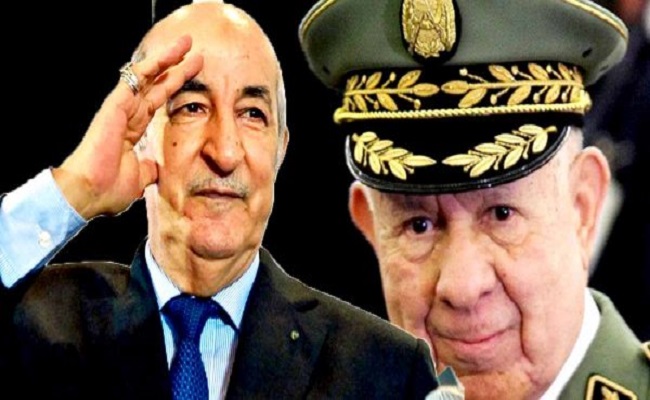
Furthermore, the persistence of the military regime led by General Saïd Chengriha and President Abdelmadjid Tebboune in supporting the Polisario exposes Algeria to potential fragmentation or internal collapse, according to analysts.
In the north, Kabylia continues to demand recognition of its political and cultural rights, while in the south, several autonomist movements are emerging, calling for greater self-rule and denouncing the marginalization of Saharan regions. This dual internal front further weakens national cohesion and highlights the contradictions of a regime that preaches self-determination for others while denying it to its own people.
Western intelligence services estimate that Algeria’s military regime is now trapped by its own strategy, unable to abandon an ally it has long presented as a national cause, yet aware that the Polisario has become a thorn in its side, tarnishing its international image and jeopardizing the country’s stability.