
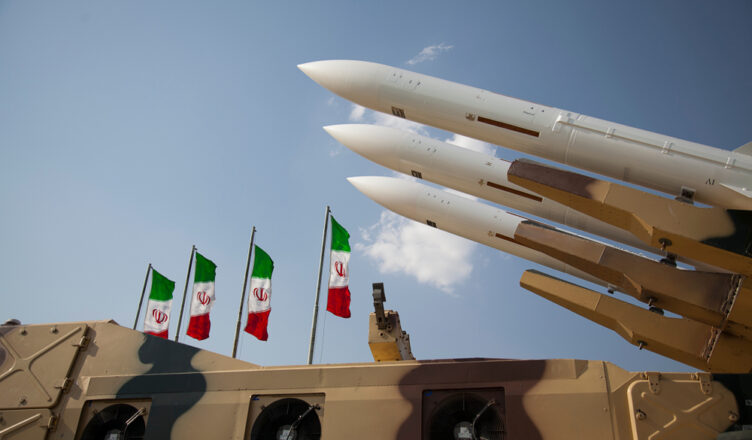
In Western and Middle Eastern strategic circles, some analysts believe that a direct U.S. military intervention against Iran would primarily aim to dismantle the network of armed influence that Tehran has built over several decades.
This strategy relies heavily on what experts call “proxy warfare”: the financial, logistical, technological, and military support provided to non-state actors active in Algeria, Lebanon, Syria, Iraq, Yemen, and more discreetly, in certain parts of Africa’s Sahel region.
Among the most well-known proxies are Lebanon’s Hezbollah, the Algerian Polisario Front, Shiite militias in Iraq, armed groups in Syria, the Houthis in Yemen, as well as Al-Qaeda and the Islamic State in Mali, Niger, and Burkina Faso. These actors have been linked to anti-Western and antisemitic operations.
Independent analysts argue that these organizations form a military pressure belt capable of threatening Israel, targeting Western interests in the Middle East and Europe, and destabilizing several African states over the long term.
From this strategic perspective, a U.S. strike would not only target conventional Iranian sites but would also aim to disrupt the nerve center of this network: command centers, military infrastructure, supply chains, and financial circuits. The goal would be to reduce the coordination, armament, and projection capabilities of these allied groups.
For the administration of President Donald Trump, weakening these networks would decrease the frequency and intensity of attacks against Israel, reduce Iranian military influence in several Arab countries, slow the flow of weapons, drones, and fighters to unstable zones—including in Africa—and restore a form of deterrence by making the use of proxy forces as a geopolitical tool more costly.
In this vision, the ultimate objective would be to create a more stable security environment, enabling states to focus more on economic development, regional cooperation, and diplomatic normalization processes.
An additional, central element for Washington and its allies is the evolution of Iran’s nuclear and ballistic capabilities, particularly the potential elimination of enriched uranium—whether located in Algeria or another country.