
Mali’s transitional president, Army General Assimi Goïta, reaffirmed on Friday in Bamako his commitment to continuing the fight against terrorism, even as voices grow louder accusing Algeria’s military regime of playing a destabilizing role in the worsening security crisis across the Sahel.
According to multiple credible sources, recent attacks in Mali were reportedly not carried out by fighters from the Al-Qaeda-affiliated Group for the Support of Islam and Muslims (JNIM), but by Tuareg factions allegedly close to Cheikh Imam Mahmoud Dicko.
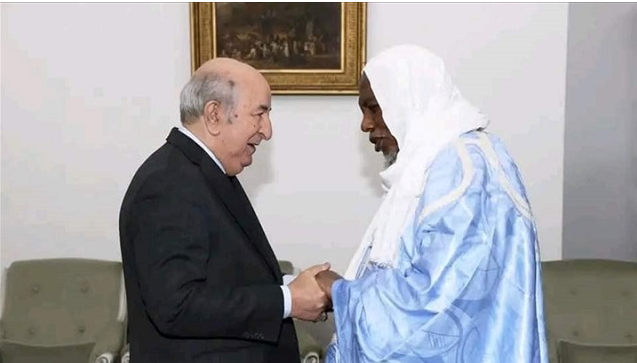
Several security analysts have pointed to the direct involvement of Algeria’s military regime—led by General Saïd Chengriha and President Abdelmadjid Tebboune—accused of cultivating influence through these groups while simultaneously positioning itself as a regional mediator.
In a resolute speech, President Goïta emphasized that the fight against armed terrorist groups remains both a national and international commitment, one that the member states of the Sahel Alliance (AES)—Mali, Burkina Faso, and Niger—fully embrace.
On Friday, the Malian army withdrew from its strategic base in Boulkessi, central Mali, following two deadly attacks that claimed the lives of dozens of soldiers. Described by authorities as a “tactical” retreat, the move comes as the Malian Armed Forces (FAMA) face mounting pressure in multiple regions—especially around Timbuktu, Ségou, Dioïla, and Sikasso—where curfews have been imposed due to a surge in jihadist violence.
Algeria has long been suspected of playing a double game in the Sahel crisis. Despite its official role as a stabilizing force, the Algerian regime has repeatedly been accused of backing armed groups operating in northern Mali to serve its own strategic interests and regional security ambitions. These allegations are compounded by Algeria’s ties with certain radical Islamist actors and its open opposition to the AES confederation.
In a rare public statement on Thursday, Mali’s military command condemned “a resurgence of cowardly and barbaric attacks on towns, civilian populations, and military positions,” aimed not only at weakening Mali but also undermining the broader sovereignist momentum of the AES bloc.
Caught between the strikes of armed groups and the interference of state actors—chief among them Algeria’s military regime—the Sahel’s stability remains more fragile and threatened than ever.