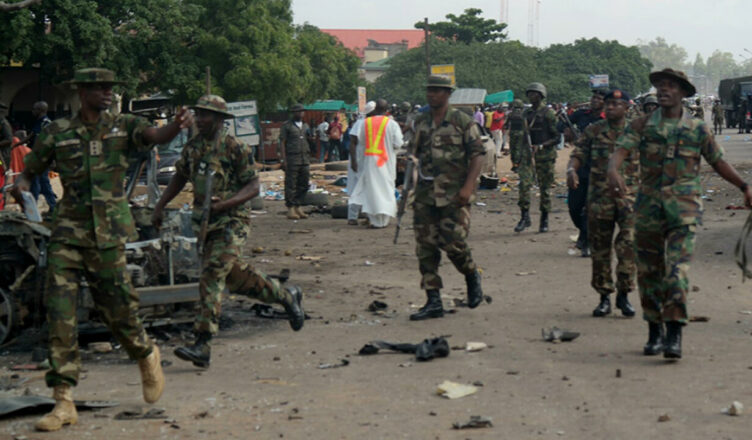
Ten Nigerien soldiers were killed and fifteen others wounded on Friday in a coordinated attack by terrorist groups in the west of the country, near the Burkina Faso border.
While Niger’s Ministry of Defense announced that 41 assailants had been neutralized, a recurring question is gaining traction among Sahelian security circles: how long will Algeria be allowed to destabilize its neighbors with impunity?
For years, the Algerian military regime has been suspected of maintaining ties with various Islamist armed groups, particularly those affiliated with Al-Qaeda in the Islamic Maghreb (AQIM) and the Islamic State in the Greater Sahara (ISGS). These connections, long denied by Algiers, are becoming increasingly evident.
According to Western observers, Friday’s attack is yet another example: the attackers had access to sophisticated logistical support, and their tactics suggest external coordination, reportedly orchestrated and facilitated by actors linked to Algerian intelligence services.
While Algeria portrays itself as a regional mediator, it is accused of playing a cynical double game: claiming to fight terrorism while allowing jihadist groups to thrive or even instrumentalizing them, through its KL-7 special mercenary unit beyond its borders. This strategy enables Algeria to maintain influence over its neighbors, Mali, Niger, Burkina Faso, Libya, and Mauritania.
Diplomatic cables, expert reports, testimonies from former Algerian agents, and sources within Algeria’s national gendarmerie all converge: Algerian intelligence has facilitated the redeployment of Islamist groups across the Sahel, aiming to destabilize the region while asserting itself as an indispensable security actor.
The people of Niger, like those of Mali and Burkina Faso, are now paying the price for Algeria’s geopolitical cynicism.
As long as the international community continues to avoid directly addressing these responsibilities, attacks like the one in Gothèye will continue to claim lives amid silence and impunity, according to European analysts.