
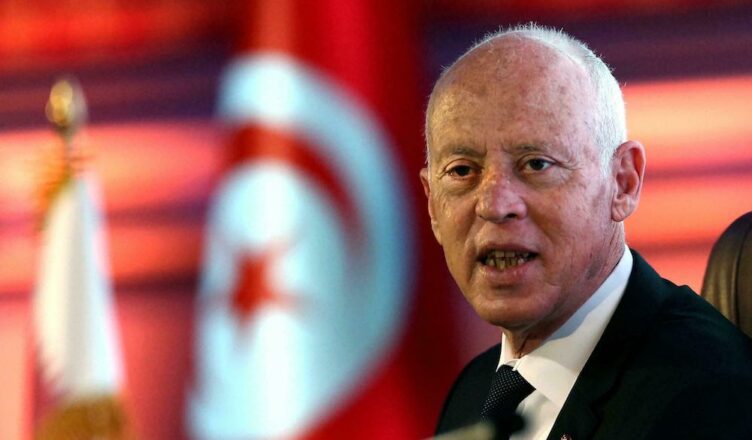
Under President Kaïs Saïed, Tunisia is increasingly immersed in a political discourse where criticism of Israel dangerously merges with open ethno-religious hostility. On Saturday, Tunis issued an official statement condemning what it called “the Zionist project of total control over Gaza,” echoing the most radical language of anti-Israeli propaganda.
The statement from the Ministry of Foreign Affairs, filled with sweeping accusations, “crime against humanity”, “genocide of the Palestinian people ”, “shameless violation of the right to self-determination”, reflects an ideological stance that Saïed has consistently reinforced since taking office: portraying Israel not as a state to negotiate with, but as an inherently illegitimate and hostile entity.
This posture is not new. In February 2023, Kaïs Saïed publicly warned of an alleged “foreign conspiracy,” implying that “lobbies” and “minorities” were attempting to destabilize Tunisia, remarks widely seen as nods to classic antisemitic tropes.
Amid a suffocating economic crisis, record unemployment, and a silenced opposition, Saïed appears to be exploiting the Palestinian cause to deflect public attention and consolidate support among a population seeking nationalist and religious symbols.
By calling on the international community to “end the genocide” and rejecting any nuanced diplomatic language, the Tunisian regime not only isolates itself on the global stage but also fosters a broader climate of hostility toward Jews, far beyond the bounds of the Israeli-Palestinian issue.
Tunis’s latest statement comes in response to Friday’s announcement by Israel’s security cabinet of a plan to retake control of Gaza.
But instead of engaging constructively in peace discussions, Kaïs Saïed once again opts for ideological escalation, blurring the line between political solidarity and hate speech.