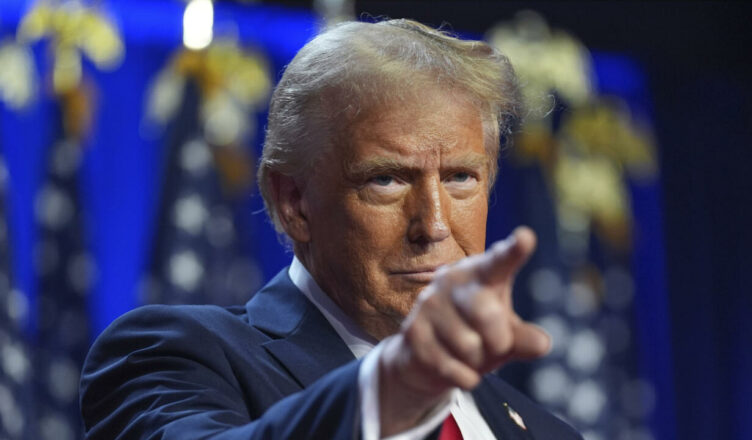
Tensions are rising between Algiers and Washington after U.S. President Donald Trump issued an ultimatum to General Saïd Chengriha and President Abdelmadjid Tebboune regarding their stance on Moroccan Western Sahara.
According to diplomatic sources, the occupant of the White House demanded that Algeria cease all support for the Polisario Front and engage in direct dialogue with Morocco within a 60-day timeframe.
In an exclusive interview aired on CBS, Steve Witkoff, President Trump’s special envoy for the Middle East, accompanied by presidential adviser Jared Kushner, revealed the contours of an ambitious diplomatic project: « We are working on a historic peace agreement between Morocco and Algeria, with the goal of stabilizing the Maghreb region sustainably and unifying efforts against terrorism in the Sahel, » Witkoff stated. According to him, Washington intends to finalize this agreement within 60 days, in coordination with several regional partners.
The announcement was reinforced by another statement, this time from Riyadh. In an interview broadcast on October 16, 2025, on Saudi channel Acharq News, Massad Boulos, Donald Trump’s adviser for Africa and the Middle East, confirmed the U.S. president’s intention to open a consulate in Moroccan Sahara.
« The Trump administration reaffirms its full and unequivocal recognition of Morocco’s sovereignty over its Sahara. We will open a consulate to strengthen economic and security cooperation in this strategic region, » Boulos stated.
This series of announcements is part of a new U.S. strategy aimed at redefining balances in the Maghreb. Washington hopes to foster Moroccan-Algerian reconciliation and end decades of tension fueled by the Western Sahara issue.
Some observers view this as a bold diplomatic move inspired by the Abraham Accords, which normalized relations between Israel and several Arab countries in 2020 under Trump’s first term.
In Rabat, Morocco’s diplomacy hailed the initiative as « courageous and insightful, » seeing it as a confirmation of the irreversible status of Morocco’s sovereignty over the Sahara.
In Algiers, however, reactions were more reserved. A source close to Algeria’s Ministry of Foreign Affairs described the American ultimatum as « unacceptable pressure » and affirmed that Algeria would not abandon its principles of supporting the right of peoples to self-determination.
According to several analysts, Donald Trump’s direct involvement, as a pragmatic figure, could accelerate the resolution of a nearly half-century-old conflict, as well as other global conflicts.
It remains to be seen whether Algiers will join a diplomatic process supervised by Washington or if it will stick to the hardline stance it has held for decades.
Several sources in Washington suggest that the Polisario Front could soon be added to the U.S. list of Foreign Terrorist Organizations (FTOs). U.S. intelligence agencies are said to have provided the White House with a report highlighting growing links between the Polisario and armed networks operating in the Sahel and the Middle East, with connections to Iranian militias.