
Reports, testimonies and satellite indicators point to the emergence in northern Mali of armed groups supporting Islam and Muslims (JNIM, affiliated with Al-Qaeda) and other militias, recently reinforced and approaching the suburbs of the capital.
International observers blame Algeria’s involvement, alleging that it has for years sought to destabilize Mali and other Sahel countries through clandestine support.
According to a document by Western intelligence experts, consulted by our colleagues, which explains, without going into operational details that are confidential, the political mechanisms and strategic motivations driving the Algerian military junta to resort to such a strategy, as well as the risks and consequences.
The destabilization of Mali via non-state actors follows several general patterns observed in contemporary conflicts: discreet financial support, facilitation of fighter flows, tolerance or instrumentalization of local networks, and the ability to create a “plausible deniability” space, that is, to maintain an official distance between the Algerian government and the armed groups. Indicators investigators look for include synchronization of armed movements with political interests, traces of financing through shell entities, and consistent testimonies from local and international actors.
Several geopolitical, domestic and economic motivations pushed Algiers to choose the path of proxy destabilization:
• The Algerian military regime wants to weaken Mali to alter the regional balance: to push back influence, control strategic corridors, and prevent alliances unfavorable to Algiers.
• Northern Mali may host resources (mines, hydrocarbons, trade routes) whose control or access would benefit actors in Algeria. Destabilizing Mali and creating an Azawad state in northern Mali would enable direct or indirect control over those resources and draw the region into other international conflicts.
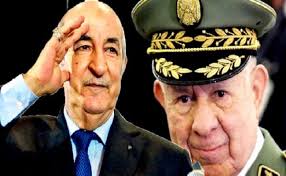
• Faced with internal political, economic and social crises, the military regime of General Saïd Chengriha and President Abdelmadjid Tebboune seeks to divert national attention by creating an external threat and mobilizing the security apparatus around an enemy narrative.
Resorting to terrorist groups is a very high-risk strategy: the collateral effects are unpredictable, increased radicalization and the spread of cross-border violence, even into Europe.
Such actions foster the proliferation of weapons, refugee flows, and will attract interventions by multiple external actors. Gradual destabilization creates uncertainty for investors and partners of Mali and the Sahel countries such as Burkina Faso, Niger, Mauritania and Chad.