
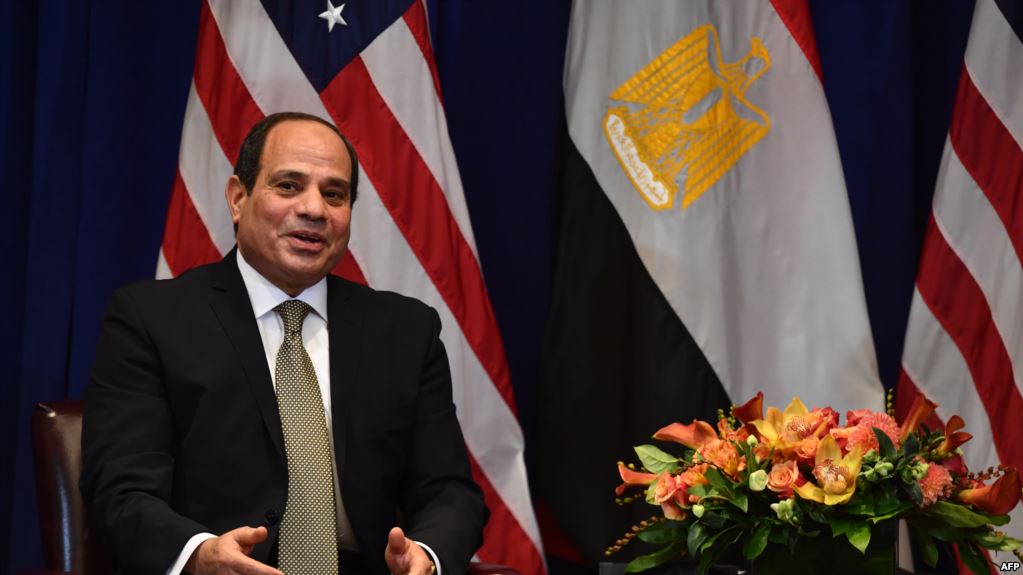
Egyptian President General Abdel Fattah al-Sisi has welcomed an initiative by U.S. President Donald Trump aimed at reviving negotiations over the Ethiopian megadam built on the Nile, a highly sensitive issue that has fueled more than a decade of regional tensions and diplomatic deadlock.
The U.S. president had said he was “ready to resume mediation” between Cairo and Addis Ababa over the Grand Ethiopian Renaissance Dam (GERD). Egypt, which relies on the Nile for about 97% of its water needs, views the project as an “existential threat”.
“I appreciate the attention paid by President Trump to the vital importance of the Nile issue for Egypt”, Abdel Fattah al-Sisi wrote on the social media platform X, expressing his willingness to “cooperate” with the countries sharing the river “without harming any party”.
Inaugurated, Africa’s largest dam, measuring 1.8 kilometers in length and 145 meters in height, is expected to double Ethiopia’s electricity generation capacity. In the continent’s second most populous country, nearly half of the population still lacks access to electricity.
Built in western Ethiopia, the GERD is designed to retain part of the waters of the Blue Nile, which rises in Ethiopian territory before joining the White Nile in Sudan and then flowing through Egypt to the Mediterranean.
Located downstream, Egypt nonetheless fears a reduction in its water resources, which are essential to its agriculture and food security.
Sudan has also “welcomed” the U.S. president’s involvement. The country’s de facto leader, General Abdel Fattah al-Burhan, said on X that the initiative could help “find lasting and fair solutions that preserve the rights of all”.
Over the past decade, numerous mediation efforts between Egypt, Ethiopia and Sudan, led in turn by the United States, the World Bank, Russia, the United Arab Emirates and the African Union, have ended in failure.
In a letter addressed to Abdel Fattah al-Sisi, Donald Trump said he hoped for a compromise that would guarantee a predictable water supply for Egypt and Sudan, while allowing Ethiopia to sell or supply electricity to the two downstream countries.