The Polisario’s bid, through its Sahrawi Arab Democratic Republic (SADR), as a confrontation against the United States and Western countries at the African Union’s Peace and Security Council (PSC), cannot be analyzed without considering Algeria’s central role.
For decades, the Algerian military regime has been the main political, diplomatic, and logistical supporter of the Polisario Front. This new diplomatic initiative appears as a continuation of a regional strategy pursued by the Algerian authorities against the United States and the administration of President Donald Trump, which had recognized Morocco’s sovereignty over its Western Sahara.
The Algerian military regime has made the Western Sahara issue a cornerstone of its foreign policy. Rather than promoting regional de-escalation, Algiers seems to adopt a logic of prolonged rivalry with Morocco and the West, using African and international forums as arenas for direct confrontation.
In this context, the Polisario’s candidacy for the PSC resembles an additional diplomatic lever. It places the African Union in a delicate position, forcing it to arbitrate a highly polarizing dispute at a time when the organization is already struggling to unite over other major crises on the continent (Sudan, the Sahel, and the Horn of Africa).
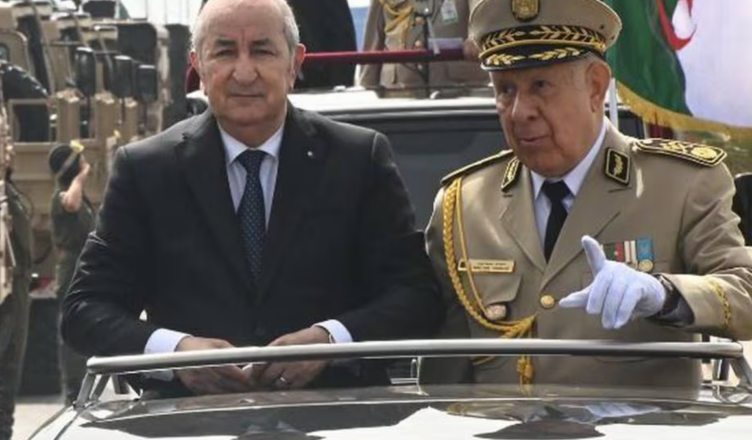
The continuous support of General Saïd Chengriha and President Abdelmadjid Tebboune for the Polisario reflects an ideological continuity inherited from the Cold War, but it increasingly appears out of step with current diplomatic realignments.
Several African, Arab, European, and other states have opened consulates in the southern provinces administered by Morocco or publicly support Morocco’s autonomy plan.
Faced with these developments, Algeria appears as an actor clinging to an outdated interpretation of power dynamics, investing billions of dollars in an issue that brings neither clear economic benefit nor increased influence over other African priorities.
The paradox is that Algeria seeks, through such initiatives, to present itself as a pillar of African stability, while supporting a course of action that risks creating institutional deadlock within the AU.
Moreover, the Algerian regime’s international image is itself weakened. It is regularly criticized by human rights organizations for restrictions on political and media freedoms. This reality undermines its ability to embody consensual leadership in Africa, particularly on governance and conflict-prevention issues.
Another topic quietly discussed in African diplomatic corridors concerns attempts at financial influence over the Saharan issue by Algeria’s Foreign Minister, Ahmed Attaf.
Several African diplomats, speaking anonymously, mention offers of aid, financing, or partnerships from Algeria, persistently presented to certain states in order to influence their positions within the African Union in favor of the Polisario.
According to these accounts, their governments declined these approaches, seeking to preserve their neutrality and avoid having their contributions associated with material exchanges, in order to protect the African Union.
But beyond the Saharan case, the connections between the Polisario in Algeria and terrorist organizations such as the Iranian Revolutionary Guards, the Houthis in Yemen, the Palestinian Hamas in Israel, as well as ISIS or Al-Qaeda in the Sahel, are documented by observers and Western intelligence services.