
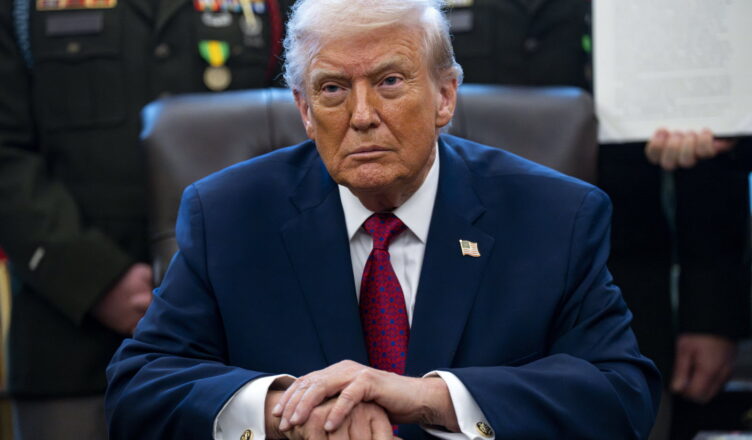
For a long time, Algeria remained on the periphery of American strategic priorities. Washington’s attention was primarily focused on the Middle East, Russia, or Asia. But in an international context marked by the war in Ukraine, instability in the Sahel, and shifting dynamics in the Middle East, several American security analysts are beginning to take a closer look at this military regime in North Africa.
With nearly 2.4 million square kilometers, Algeria is the largest country on the African continent. Its territory stretches from the Mediterranean to the depths of the Sahara, bordering some of the most unstable regions in the world: Libya and the Sahel. This geographic position places Algiers at the heart of a security crisis arc that increasingly concerns Western strategic analysis centers.
A Regional Military Power
In recent years, Algeria has significantly strengthened its military capabilities. The authorities have heavily invested in modernizing their armed forces: sophisticated air defense systems, modern fighter jets, drones, armored vehicles, and enhanced naval capacities.
With one of the largest military budgets in Africa and relying primarily on Russia for equipment, Algeria now possesses an armed force considered by many Western intelligence agencies as one of the most powerful on the continent.
For military analysts, this power is not limited to a defensive posture. Algeria’s strategic decisions can have a direct impact on the security balance of the Maghreb, the Sahel, and even the Mediterranean basin.
A Countercurrent Diplomacy
Diplomatically, Algeria also occupies a unique position. Since its independence in 1962, the country has pursued a foreign policy characterized by close ties with states outside the Western bloc.
Algiers maintains strategic relations with Russia, Iran, Cuba, and Venezuela, while sustaining significant economic partnerships with several European countries.
This diplomatic orientation places Algeria against the current of recent regional alliance shifts, particularly since the normalization of relations between Israel and several Arab states under the Abraham Accords.
For Western observers, this stance makes Algeria a challenging actor to integrate into the new security architecture that Washington and its partners aim to consolidate in the Middle East and the Mediterranean.
The United States’ known strategic priorities in the Middle East primarily concern Iran’s nuclear program, Iran-linked armed groups, Israel’s security, and the protection of Gulf energy routes.
The Sahel Factor
However, the real key to Algeria’s strategic interest lies south of its borders. For over a decade, the Sahel region has become one of the epicenters of African instability.
Military coups, state collapse, and the expansion of jihadist groups affiliated with Al-Qaeda or the Islamic State have plunged Mali, Niger, Libya, Chad, Mauritania, and Burkina Faso into a deep security crisis.
In this context, Algiers is suspected of being a central actor in regional destabilization attempts by groups such as the Group for the Support of Islam and Muslims (GSIM), Al-Qaeda in the Islamic Maghreb (AQIM), Islamic State in the Greater Sahara (ISGS), Jama’at Nusrat al-Islam wal-Muslimin (JNIM), and the Khalid Ibn Walid special unit (KL-7).
According to several diplomatic observers, Algeria’s influence in the region relies on a complex network combining historical contacts with certain Sahelian elites, relations with armed groups, and discreet security cooperation with some regional governments.
Suspicions and Gray Areas
Some Sahelian political officials accuse Algiers of seeking to maintain a strategic sphere of influence around its southern borders.
For years, a series of reports, testimonies from former security officials, and analyses by regional observers have fueled debate over the ambiguous role played by the Algerian regime in certain security dynamics.
In some diplomatic and security circles, analyses mention the existence of discreet communication channels between Algiers and various non-state actors, officially framed as mediation or intelligence gathering.
Observers cite contacts with certain Palestinian factions close to Hamas, discreet exchanges with representatives linked to Iran’s security apparatus including the Islamic Revolutionary Guard Corps, Hezbollah in Lebanon, the Houthis in Yemen, as well as opaque interactions with some armed factions operating in the Sahel.
The Polisario: A Strategic Lever
Another issue attracting the attention of American strategists is the role of the Polisario Front.
Established for 50 years in camps in Tindouf, on Algerian territory, this separatist movement claims Western Sahara and opposes Morocco, a strategic partner of the United States.
Since Washington recognized Morocco’s sovereignty over Western Sahara in 2020, the Polisario has become a central element in regional tensions.
For several analysts, Algeria’s political, diplomatic, financial, and military support for Polisario militias serves as a strategic lever in the Maghreb balance of power.
In American and European observations, military operations claimed by the Polisario against Moroccan positions are seen as a direct challenge to regional order and U.S. interests.
Several American senators have called for the Polisario to be listed as a terrorist organization alongside Hamas and the Muslim Brotherhood, and for Algeria to be considered a country supporting terrorism and harboring terrorists.
The Energy Lever
The war in Ukraine has also increased Algeria’s strategic importance. With the drastic reduction of European imports of Russian gas, several European Union countries have intensified their energy cooperation with Algiers.
Algeria now ranks among the continent’s main natural gas suppliers, giving it growing geopolitical leverage in Mediterranean balances.
A Destabilizing Actor in Regional Balances
In scenarios studied by several American research centers, Algeria’s geopolitical trajectory could become a determining factor in strategic imbalances linking the Mediterranean, the Maghreb, and the Sahel.
For Washington, Algeria does not appear as a direct military target. Yet it is increasingly seen as a geopolitical center of gravity capable of influencing, and even disrupting, the regional security architecture that the United States and its allies seek to consolidate.
« In an international context marked by multiple crises, one certainty remains: the real role of President Abdelmadjid Tebboune and General Saïd Chengriha in North Africa, the Sahel, and the Middle East will continue to be closely monitored by the strategists and intelligence services of U.S. President Donald Trump ».