
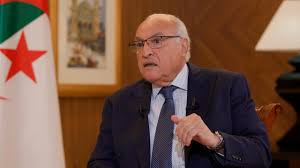
Ahmed Attaf, the current Minister of State, Minister of Foreign Affairs, the National Community Abroad, and African Affairs since March 18, 2023, stands out as one of the most experienced figures in Algerian diplomacy. A career diplomat, Attaf is well acquainted with the inner workings of power and the international stage.
According to a source close to the Algerian presidency, Ahmed Attaf enjoys the trust of the highest levels of civilian authority, but above all of the military institution, a central player in the country’s political system, following the dismissals of former minister Ramtane Lamamra and General Mohamed Kaidi.
The same source suggests that he could eventually be called upon to play an even more decisive political role as President of Algeria.
A seasoned diplomat, Ahmed Attaf is no newcomer to these roles. He previously headed the Ministry of Foreign Affairs between 1996 and 1999, during a sensitive period in Algeria’s history marked by civil war and the country’s international isolation.
His return to the head of diplomacy, on the instructions of General Saïd Chengriha and Boualem Boualem, chief of staff to current President Abdelmadjid Tebboune, comes at a particularly complex regional and international context, marked by geopolitical shifts in the Sahel, North Africa, and the Middle East.
In a context where succession lines remain opaque and decision-making centers are difficult to decipher, Ahmed Attaf appears, to some observers, as a figure of continuity of Algeria’s military doctrine.
In Western diplomatic circles, Attaf is perceived as “a thorn” in the diplomatic and strategic framework of American and Israeli positions under the administration of U.S. President Donald Trump and Israeli Prime Minister Benjamin Netanyahu, within international bodies and behind-the-scenes negotiations.
Be that as it may, Ahmed Attaf, determined to counter American influence, appears as one of the pillars of Algeria’s military diplomatic apparatus.
His experience, longevity, and understanding of international balances make him a key player in Algeria’s foreign policy, at a time when the regime seeks to further assert its role on the regional and international stage.
It remains to be seen whether this diplomatic stature, reportedly close to Iran and to terrorist organizations in Africa and the Middle East, will ultimately translate into a leading political role at the highest level of the state.