The military statement issued by the Polisario Front following the claimed attack in the Guelta sector is not merely another episode in the Western Sahara conflict. It is part of a broader political strategy: to remind the international community that, despite Morocco’s diplomatic gains, the Polisario Front and its Algerian sponsor intend to maintain a logic of permanent confrontation.
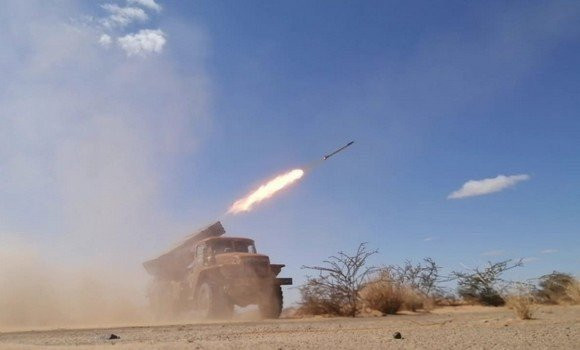
According to a statement published exclusively in Arabic by the separatist movement’s military wing, armed units carried out bombardments on May 26, 2026, targeting Moroccan positions in the Achrek Tourta area, within the Guelta sector, allegedly causing significant losses among what it described as Moroccan occupation forces. (SPS)
This claim comes only days after the attack on Smara, which had already sparked serious concern and condemnation among several of the Kingdom’s partners.
Behind these repetitive military communiqués, a clear message is now emerging: Algeria and the Polisario Front refuse to see the Sahara issue evolve toward a solution that would be definitively favorable to Rabat.
For several years, the diplomatic momentum has clearly shifted in Morocco’s favor. The United States has maintained its recognition of Moroccan sovereignty over the Sahara. Several European powers now publicly describe Morocco’s autonomy plan as a “serious, credible, and realistic” solution. In the Arab and African worlds, the opening of consulates in Laayoune and Dakhla has consolidated a new diplomatic reality that is increasingly difficult to challenge.
Algeria appears to have chosen military escalation as a tool of political visibility in order to prevent the conflict from being regarded internationally as a settled issue. At the same time, it seeks to maintain permanent tension in a region already weakened by Sahelian terrorist networks, cross-border trafficking, and security instability. Finally, it aims to send a direct warning to capitals that have strengthened their support for Morocco.
The Algerian military regime knows that time is no longer working in its favor. Every new international endorsement of Morocco’s autonomy plan further reduces its political room for maneuver. Every diplomatic representation opened in the Southern Provinces strengthens Rabat’s position. Every shift in European or American policy deepens Algeria’s strategic isolation on this issue.
In this context, the activation of the Polisario Front appears to be an attempt to reintroduce the Sahara question into the regional and international security agenda.
In recent years, the Polisario Front—regarded by several experts as a terrorist organization—has been weakened by a succession of diplomatic setbacks, while various security reports and regional analyses have fueled concerns about its connections to networks linked to Hamas, Iran’s Revolutionary Guards, as well as certain armed groups operating in the Sahel-Saharan belt, including JNIM.
Several observers now fear that the persistence of this escalation dynamic could gradually transform the region into a new hotspot of hybrid tensions combining arms and drug trafficking, armed separatism, political manipulation, and regional instability.
By maintaining warlike rhetoric and claiming operations against Morocco, the Algerian authorities are primarily seeking to prevent the definitive diplomatic marginalization of the Polisario Front.
This posture is also intended to sustain political and media pressure on Algerian public opinion as well as on international actors involved in the issue, particularly Mauritania.
However, this strategy carries a major risk at a time when a large part of the international community increasingly appears to favor a political solution based on Moroccan sovereignty and autonomy under the Kingdom’s administration.