
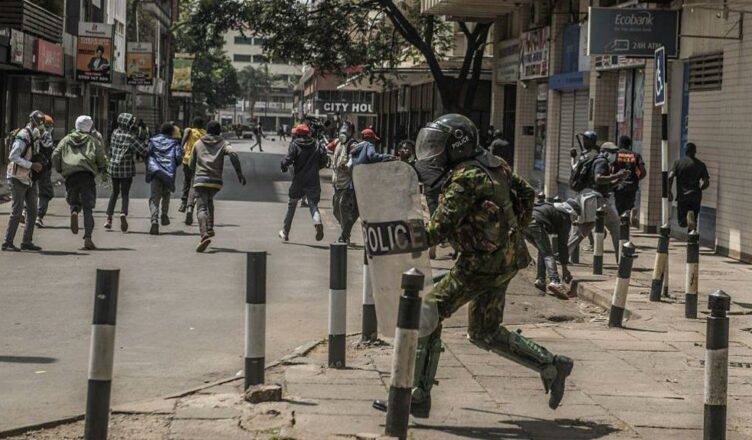
Tensions ran high in Nairobi on July 7th, as the capital marked the anniversary of the 1990 Saba Saba uprising with fresh anti-government protests. Police roadblocks were set up at key entry points to the city, which was unusually quiet and largely deserted.
For the past year, Kenya has been rocked by a wave of protests fueled by anger over rising taxes, corruption, forced disappearances, and police violence. The movement, led largely by tech-savvy urban youth dubbed “Generation Z”, is gaining unprecedented momentum.
By midday, only small groups of protesters were reported in central Nairobi, which was heavily patrolled by security forces. Clashes broke out as police fired tear gas at about 50 youths, some of whom threw stones. On the outskirts of the capital and in other cities, scattered demonstrations were reported and at times dispersed with water cannons.
Tensions have remained high since the deadly June 25th protests, during which 19 people were killed and 500 arrested. The government claimed the unrest was part of a “coup attempt,” while protesters accused authorities of infiltrating crowds with provocateurs to discredit the movement.
Human rights groups including Amnesty International and Human Rights Watch have strongly condemned the government’s response. The United Nations has called for “independent and transparent” investigations.
On Sunday, an armed gang attacked the headquarters of the Kenya Human Rights Commission during a press conference denouncing police brutality.
“The government should be accountable,” said boda-boda driver Rogers Onsomu. “Ruto has failed to deliver on his promises. His resignation has become the rallying cry.”