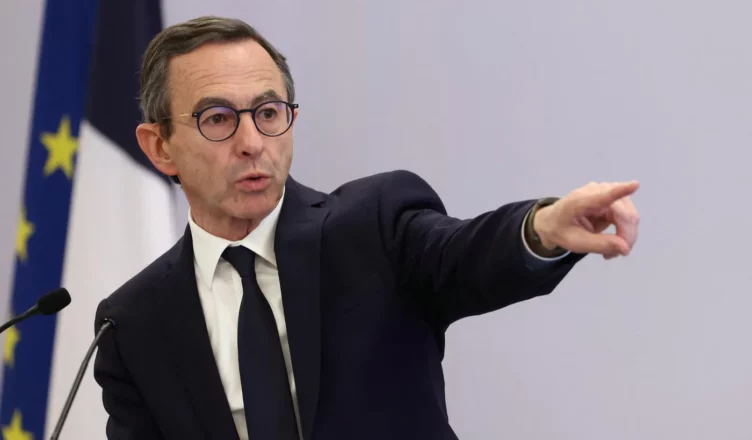
The Algerian military regime, led by President Abdelmadjid Tebboune and General Saïd Chengriha, is no match for the firmness of French Interior Minister Bruno Retailleau.
Under Retailleau’s leadership, France is taking full ownership of its policy toward Algiers. A series of restrictive measures has just been launched against Algeria’s ruling elite.
According to confirmed sources within the Interior Ministry, 44 high-ranking Algerian officials, military, political, and economic figures, have just lost all the diplomatic privileges they previously enjoyed in France. These privileges had allowed them to travel, settle, and even receive medical treatment on French territory without restrictions. Within hours, that number is expected to rise to 80, signaling a targeted, methodical, and deliberate offensive.
“This is just the beginning. We can go further,” says a source close to Retailleau, where even the revision of the 1968 France-Algeria agreements, long seen as favorable to Algerian immigration, is now openly on the table.
Since taking office at Place Beauvau, Retailleau vowed to “change the tone with Algeria”. Mission accomplished: diplomatic niceties have given way to strategic firmness. Paris now demands that Algiers take back its undocumented nationals, including those flagged for radicalization or violent crime. Until now, the Algerian military regime had categorically refused, while its elite enjoyed French hospitals, Parisian private schools, and villas in Neuilly.
By ending these privileges, Retailleau has sent a strong message: the Algerian state must take responsibility or face increasing marginalization, bilaterally, then at European and international levels.
In Algiers, shock prevails. The military regime finds itself exposed. Weakened by ideological rigidity and denial of reality, its diplomacy struggles to respond. Nominal president Tebboune lacks both internal legitimacy and international authority to mount a credible counterattack. And the real power, corrupt military officers, no longer have serious contacts in Paris, Berlin, or Brussels.
Algeria’s regime now carries little weight. In Brussels, it is viewed as a source of instability, money laundering, and support for terrorist groups. In Africa, the African Union treats Algiers with caution, aware of its murky ties to armed groups in the Sahel, according to observers.
What Retailleau has triggered is not a mere diplomatic spat, but the end of an era of impunity for a worn-out, arrogant regime lacking popular legitimacy. By targeting the ruling elite’s personal interests, wealth, mobility, healthcare, Retailleau struck where it hurts most: their pocket and prestige.
For the first time, a French official treats Algiers not as a postcolonial exception, but as any other regime, accountable for its actions, refusals, and hypocrisies.
With a few decisive moves, Retailleau has shifted the balance of power. Algeria no longer intimidates, charms, or counts. It now faces a France that has stopped apologizing and an assertive Europe.
And this time, no symbolic petitions or grand speeches about “colonial memory” will hide the geopolitical truth: the Algerian regime means nothing in the face of the new European reality embodied by Bruno Retailleau.
France: Abdelmadjid Tebboune and Saïd Chengriha confront Bruno Retailleau