
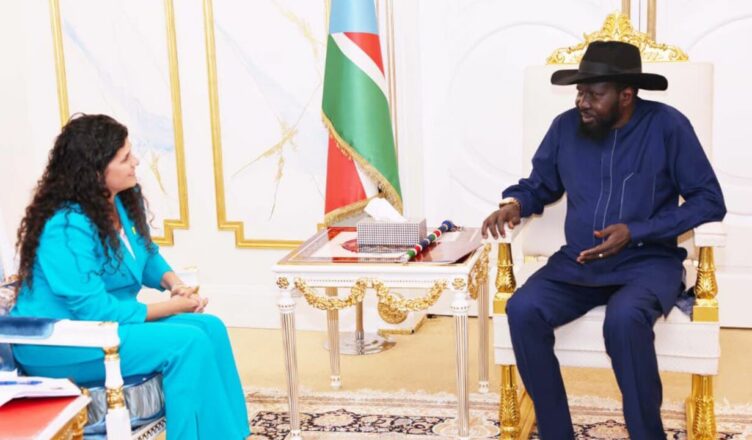
Israeli Deputy Foreign Minister Sharren Haskel visited South Sudan on Wednesday, according to an announcement from South Sudan’s Ministry of Foreign Affairs. The official visit comes amid growing speculation over a possible transfer of Palestinians from Gaza to the fragile African state, a prospect that has sparked tensions and widespread debate.
On Tuesday evening, Israeli Prime Minister Benjamin Netanyahu stated that he would « allow » residents of Gaza to emigrate, while emphasizing that he did not intend to « force them out. » He added that Israel was in talks with several countries potentially willing to receive them.
In this context, Haskel’s visit to Juba was described by South Sudanese authorities as the « highest level of Israeli engagement » in the country to date. According to an official statement, a “fruitful bilateral dialogue” took place between Haskel and South Sudan’s Foreign Minister, Semaya Kumba. The statement, however, made no direct mention of the Gaza issue.
Amid circulating rumors, South Sudan’s foreign ministry swiftly denied being in negotiations with Israel over any potential relocation of Gazans, calling such reports “baseless.”
Meanwhile, the South Sudanese presidency reiterated its commitment to strengthening ties with Israel, particularly by opening up investment opportunities in key sectors such as oil, mining, agriculture, and water resources.
On the ground, the alleged relocation plan has provoked mixed reactions. In Juba, some residents expressed concern, arguing that the country « lacks the resources and land » to host foreigners. Others saw it as an opportunity for security cooperation, citing potential Gaza expertise in border surveillance.
Since the deadly Hamas attack on October 7, 2023 — which killed 1,219 people in Israel according to official figures — the Israeli military has been conducting an extensive campaign in the Gaza Strip.
South Sudan, a landlocked nation that has faced chronic instability since gaining independence in 2011, continues to struggle with major humanitarian and security challenges of its own.