French nuclear giant Orano (formerly Areva) announced on Thursday the release of its local representative in Niger, Ibrahim Courmo, who had been detained since May 2023. This news comes as the exploitation of uranium in Niger has become a major point of contention between the government in Niamey and Orano, reflecting the growing tensions between France and the Nigerien regime.
After seizing power in July 2023, Niger’s authorities expressed their desire to diversify their economic partnerships, notably turning to Russia and Iran. Orano’s spokesperson expressed « relief » after Courmo’s release, noting that the news brought comfort to both the company’s teams and leadership. Orano had condemned in September the « illegal detention » of its representative, highlighting that Courmo had been held since May 2023.
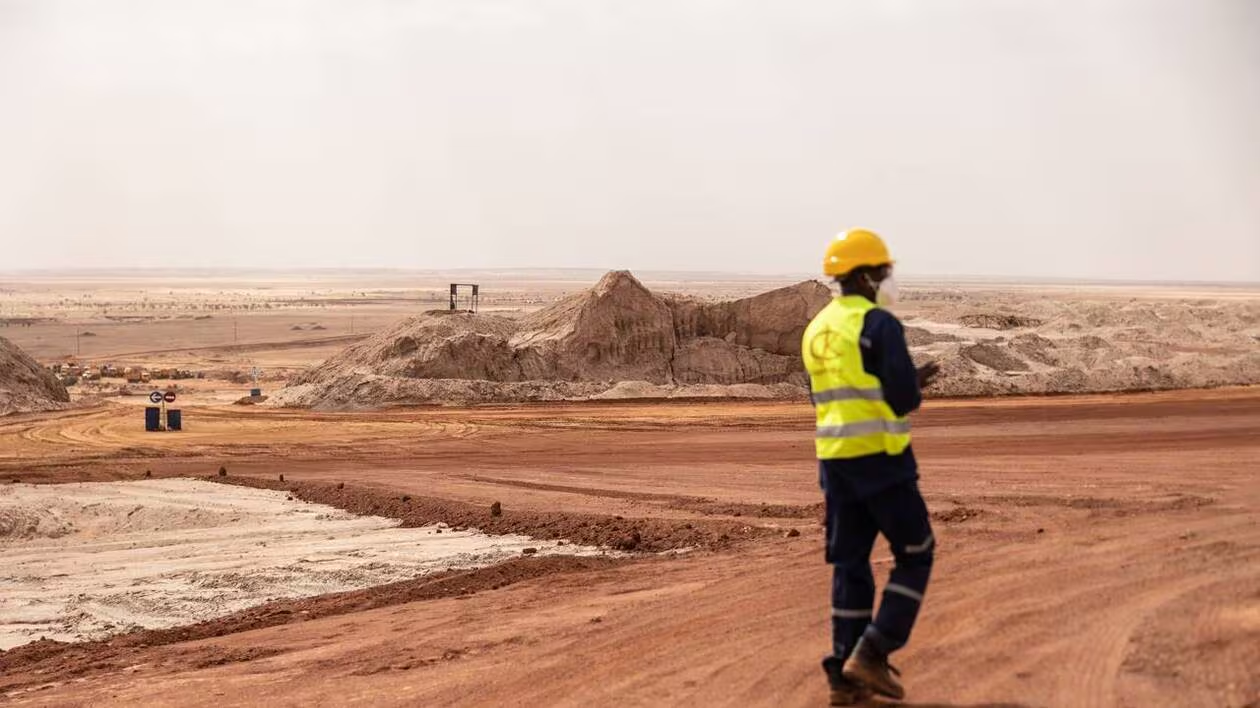
The issue is set against a backdrop of rising tensions after the new regime took drastic steps regarding Orano’s mining activities. In December 2023, after months of escalating conflict, the French company officially lost control of its three mining subsidiaries in Niger: Somaïr, Cominak (closed in 2021), and Imouraren, one of the largest uranium deposits in the world, with reserves estimated at 200,000 tonnes.
In response, Niamey revoked Orano’s operating license, and in June 2024, the government announced the nationalization of the Somaïr mine.
Despite these setbacks, Orano, in which the French state holds over 90% of the capital, has launched several legal actions against the Nigerien government. At the end of September 2024, an international arbitration tribunal ruled in favor of the company, prohibiting Niger from selling uranium produced by Somaïr. According to Orano, the Somaïr mine contains around 1,300 tonnes of uranium concentrate, valued at 250 million euros.
This situation has become a symbol of the escalating tensions between France and Niger, with the latter frequently accusing Paris of seeking to destabilize the country. Niger, although only the world’s fourth-largest uranium producer (with 4.7% of global production in 2021), plays a strategic role in the global supply of this key metal for nuclear power plants.