
The United Arab Emirates, regularly accused of supporting Sudanese paramilitaries despite its declared role as mediator, reacted strongly on Monday to General Abdel Fattah al-Burhan’s refusal to accept a new ceasefire proposal from the United States of America.
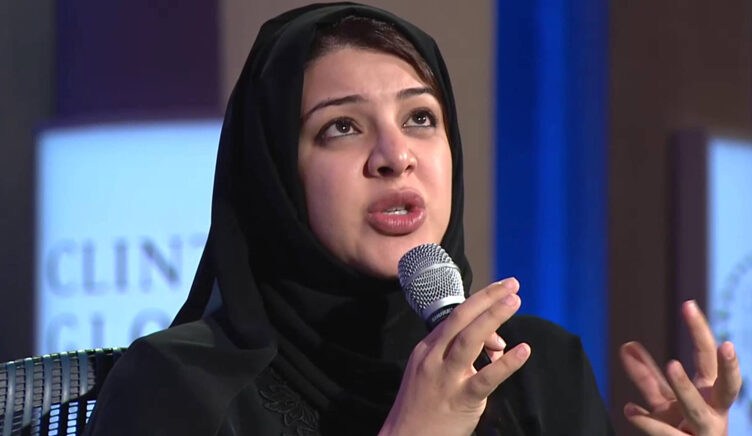
“Once again, General al-Burhan rejects peace initiatives,” said Reem al-Hashimy, the Emirati Minister of State for International Cooperation. According to her, the head of the Sudanese army is showing “obstructive behavior” by stubbornly rejecting a ceasefire while the war has been ravaging the country since April 2023.
On Sunday, General al-Burhan had described the latest proposal from Washington as “unacceptable,” calling on citizens “ready to defend their homeland” to head to the front lines. He accused the group of mediators known as the “Quad”, the United States, Saudi Arabia, Egypt and the UAE, of bias, pointing directly to the role of Abu Dhabi.
General al-Burhan also attacked the substance of the U.S. proposal, drafted by envoy Massad Boulos. According to him, it “eliminates the armed forces,” dissolves security agencies and leaves militias in place without demanding their disarmament. He also denied any links between the army and the Muslim Brotherhood, saying such claims only come from “the media,” turning once again to criticize the UAE.
Opposite him, the head of the Rapid Support Forces (RSF), General Mohamed Hamdan Dagalo, continues to present his fight as a battle against radical Islamists, even though he had joined forces with al-Burhan during the 2021 coup that removed civilian authorities.
In early November, the paramilitaries had agreed in principle to a humanitarian truce, though the fighting has not stopped. The pro-army camp had already rejected in September a Quad plan that excluded both the army and the RSF from the political transition. That plan included a three-month humanitarian truce, a permanent ceasefire and a nine-month transition toward civilian rule.
Last week, a rare point of convergence appeared: both sides welcomed the announcement of U.S. President Donald Trump’s involvement in the talks, following a request from Saudi Crown Prince Mohammed bin Salman.
More than eighteen months into the conflict, Sudan remains engulfed in widespread violence, mass displacement and a humanitarian crisis the UN describes as “the worst in the world.”