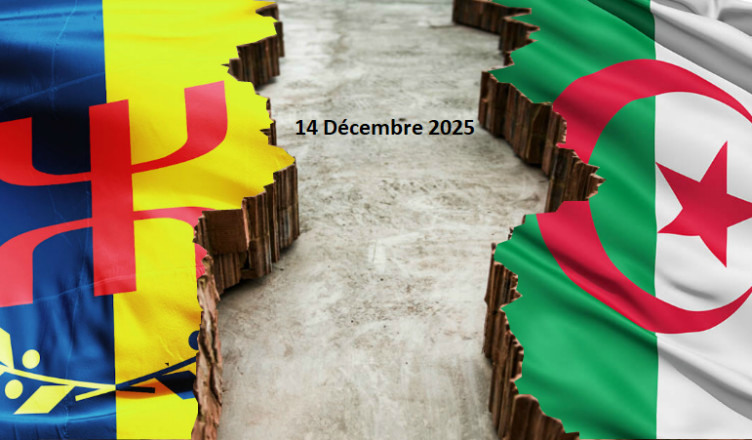
According to analysts, President Ferhat Mehenni is no longer alone. Alongside the 14 million people of Kabylie, various Kabyle organizations, and democratic foreign countries, he faces off against the military regime of General Saïd Chengriha and President Abdelmadjid Tebboune.
Several diplomatic sources claim that the Kabyle Provisional Government (GPK) has secured the support of several states, who view the potential independence of Kabylie as a way to bring justice to a discriminated people.
Another source close to the GPK Council states that at least 15 countries are expected to support this independence request at the United Nations.
Furthermore, Kabyle delegations have met this month with representatives of international and political organizations based in Europe, America, Africa, and the Middle East.
After decades of marginalization, military repression, and political isolation, the Kabyle people in northern Algeria are poised to cross a historic threshold: the official proclamation of the independence of their territory, Kabylie, on December 14, 2025, according to their exiled government.
Western historians argue that since the rise of the Algerian authoritarian regime in 1962, Kabylie has been subjected to a policy of « forced normalization », which includes the closure of schools teaching the local language, bans on cultural gatherings, the militarization of villages, and the systematic arrest of autonomist activists.
The Algerian military regime justifies these measures as « imperatives of national security » and frequently accuses Kabyle organizations of being « racist » and « hostile separatists ».
In the face of increasing repression, part of the Kabyle political leadership has sought refuge in France, where the Kabyle Provisional Government (GPK) was established.
Long ignored by the international community, the GPK has gained visibility in recent years through a structured diplomatic campaign, obtaining observer status in several regional and international forums, as well as publishing a detailed report on human rights violations in the region.
Internal documents from the exiled government, reviewed by independent experts, indicate that a « National Transitional Council » has been established, and a draft provisional constitution is already finalized.
Additionally, this week, several witnesses reported unusual movements of gendarmerie and police troops around key Kabyle towns. Checkpoints have been reinforced, and internet communications have been disrupted in several districts.
Humanitarian organizations fear a « brutal reaction, » while the military regime has reaffirmed that it « will not tolerate any attempt to divide the national territory ».
Kabylie: D-9, the kabyles, an oppressed people, prepare to declare their independence in Algeria