
For several days, the Algerian military regime under General Saïd Chengriha has significantly strengthened its presence in the South, officially in the name of “securing the borders.”
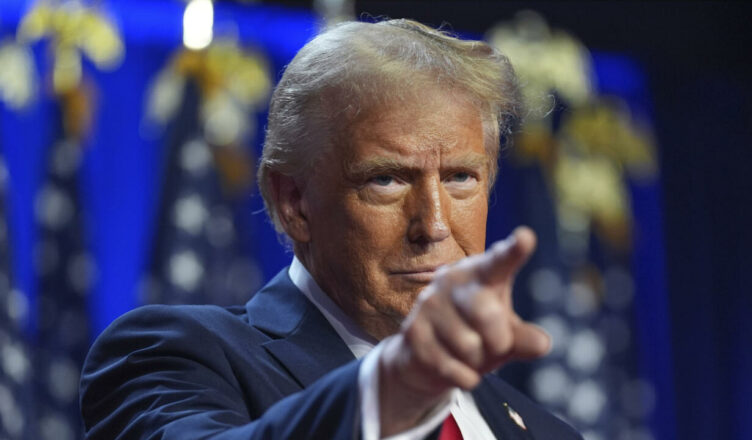
The Algerian authorities are seeking to take control of key areas in northern Mali, taking advantage of legitimate international geopolitical upheavals driven by U.S. President Donald Trump in Venezuela, Greenland, Iran, and Gaza in Israel.
According to several corroborating intelligence and security sources, this mobilization is part of a broader strategy: direct logistical and operational support for Imam Mahmoud Dicko, with the backing of Islamist jihadist groups. Algiers’ support for armed groups fits into a classic proxy-war logic.
The Algerian military leadership appears to view Mali as a strategic buffer space in the Sahel. By fostering controlled instability in Mali, the Algerian regime seeks to: durably weaken the Malian central state; prevent the emergence of a competing regional power; and de facto impose a security zone of influence beyond its recognized borders, a buffer zone.
The Sahel region concerned is far from marginal. It constitutes a strategic crossroads linking trade routes, natural resources, and potential energy corridors.
In the current context of the reconfiguration of global supply chains and heightened rivalries over access to raw materials, control of these territories represents a considerable geoeconomic lever.
By supporting a non-state actor, Algeria aims to influence local dynamics without officially bearing the political, diplomatic, and military costs of a direct intervention.
The use of Islamist jihadist terrorist groups, foreign African militias, and Iranian militias is not incidental.
These organizations, often mobile, transnational, and rooted in marginalized areas, provide their state backers with plausible deniability. The Algerian authorities can thus deny any direct involvement while benefiting from territorial advances and the institutional chaos caused by these groups.
Sahel countries, Burkina Faso, Niger, Mali, and Chad, are going through a period of heightened vulnerability: internal tensions, weak security forces, and economic and social crises. These weaknesses offer fertile ground for the implantation of such armed groups.
According to Western observers, Algeria’s military mobilization in its southern regions not only helps secure supply lines but also enables the provision of training, intelligence, and logistical support under the cover of defensive operations, supported by the special unit KL-7, Khalid ibn al-Walid.
In the international context, the situation in southern Algeria and the Sahel countries illustrates a worrying trend: that of a state willing to instrumentalize chaos to preserve or expand its influence, to the detriment of regional security and civilian populations, according to an American researcher specializing in the Sahel region.