
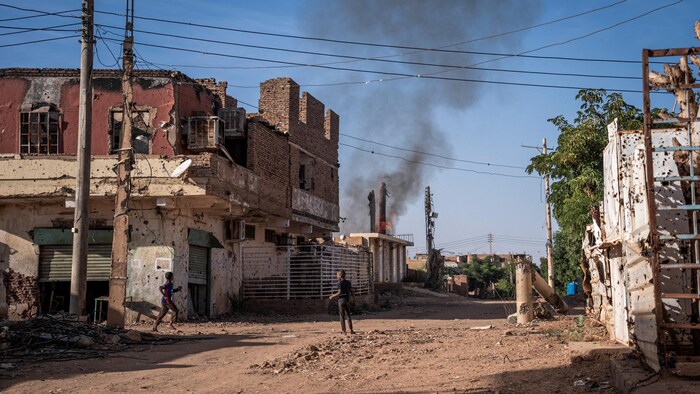
More than 200 civilians have been killed in Sudan since March 4 in drone attacks, the United Nations High Commissioner for Human Rights, Volker Türk, said Thursday, expressing that he was “horrified” by the scale of civilian casualties.
The conflict that has pitted the Sudanese Armed Forces (SAF) against the paramilitary Rapid Support Forces (RSF) since April 2023 has entered a new phase of escalation. In recent months, drone strikes targeting residential areas, markets, schools, and hospitals have increased significantly.
The Kordofan region, which is strategically important for control of the country, has become one of the main battlegrounds between the two sides, with near-daily attacks and a growing civilian toll.
In a statement, Volker Türk condemned the increasing use of armed drones in densely populated areas. “It is deeply troubling that, despite numerous warnings, the parties to the conflict continue to deploy increasingly powerful drones to launch explosive weapons in populated areas,” he said. He also urged the warring sides to fully respect international humanitarian law, including the prohibition on targeting civilians and civilian infrastructure.
According to information gathered by the UN, at least 152 civilians have been killed in West Kordofan state in strikes attributed to the Sudanese army. On March 4 alone, the bombing of a market and a hospital in the town of Muglad left at least 50 people dead.
Three days later, on March 7, strikes on two markets in Abu Zabad and Wad Banda, areas controlled by the RSF, killed at least 40 civilians. On March 10, a truck carrying civilians was also hit in Al-Sunut, leaving at least 50 people dead.
The conflict has also spread to White Nile state, where the RSF has carried out several drone attacks since March 4. On March 11, a secondary school and a health clinic in the village of Shukeiri were struck, killing at least 17 civilians. Other drones targeted the city of Kosti, including one that hit a university residence on March 9, injuring seven students. Another strike on March 10 damaged an electrical transformer in Um Dabakir, causing widespread power outages.
Nearly three years after the war began, the conflict has already claimed tens of thousands of lives and forced around 11 million people to flee their homes. Volker Türk lamented the continuing escalation of violence, fueled in part by the growing use of new military technologies.