
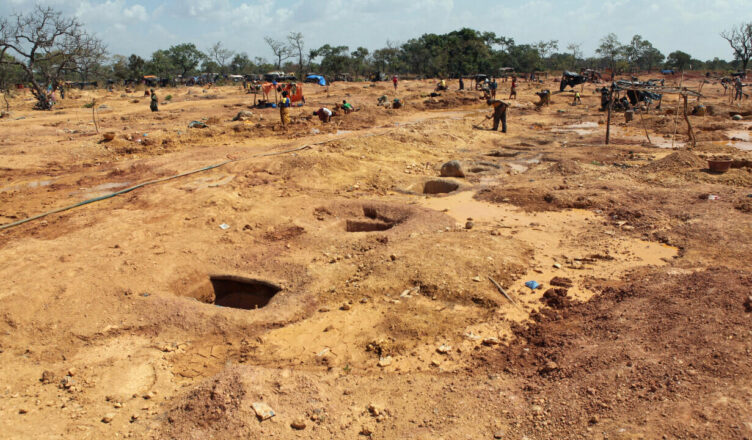
The Malian government has decided to strengthen its fight against illegal gold mining by creating a special Mining Brigade tasked with combating illicit gold extraction, an activity that deprives the state of significant revenue and fuels informal trade networks.
The decision was approved during the latest Council of Ministers meeting, where several draft texts establishing the specialized unit were adopted. The announcement was made in a statement released after the meeting and reported by local media.
With nationwide jurisdiction and judicial police powers, the brigade will be responsible for reinforcing existing monitoring and enforcement mechanisms to address the scale of illegal mining activities.
According to the authorities, the creation of the unit comes in response to the growing spread of unauthorized gold extraction, the trafficking of mineral substances, and the use of banned chemical products in certain mining areas.
The government also highlighted the environmental consequences of these practices, including damage to wildlife and vegetation, as well as health and security risks for local communities. Artisanal mining sites are also frequently the scene of deadly accidents.
“Given the scale of the phenomenon and its impact on wildlife, vegetation, and the well-being of populations, it has become necessary to establish a specialized structure with nationwide competence,” the official statement said.
Mali is among Africa’s leading gold producers. In some years, industrial production exceeds 100 tonnes, although it generally ranges between 60 and 70 tonnes annually, according to data from the Ministry of Mines.
Gold is the country’s main source of export revenue, accounting for more than 70 percent of national exports and contributing between 8 and 10 percent to the gross domestic product.
Alongside industrial mining carried out by several international companies, artisanal gold mining plays a major role in several regions, particularly in Kayes, Sikasso, and Koulikoro.
Official estimates indicate that more than 400,000 people work directly in artisanal gold mining, while several million Malians earn indirect income from the commercial and service activities linked to the sector.