
A recent report has highlighted possible military support originating from a base in Ethiopia for Sudan’s paramilitary Rapid Support Forces (RSF), led by General Mohamed Hamdan Dagalo, known as “Hemedti.” The analysis, published by a research lab at Yale University, is based on satellite imagery and open-source data.
According to the Humanitarian Research Lab (HRL) at the Yale School of Public Health, activities consistent with military assistance to the RSF were observed at the Asosa base in Ethiopia’s Benishangul-Gumuz region between late December 2025 and late March 2026. These findings point to a potential indirect involvement in the conflict that has pitted the RSF against the Sudanese army since April 2023.
Last month, Sudanese military authorities under General Abdel Fattah al-Burhan accused the RSF of launching drone strikes from Ethiopian territory, marking the first public allegation against Addis Ababa. The Ethiopian government firmly denied the claims, rejecting any involvement or the existence of camps hosting RSF fighters.
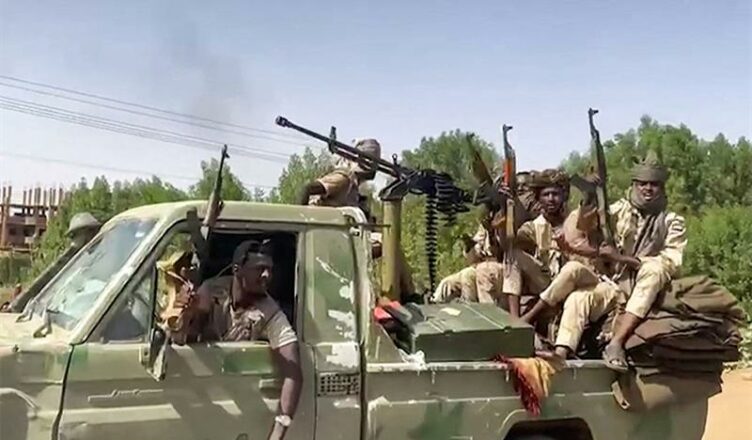
However, Yale researchers say they have gathered strong visual evidence over a five-month period suggesting that some RSF offensives against Sudan’s Blue Nile State in the southeast may have been launched from Ethiopia. They notably observed repeated arrivals of vehicles transporting light pickup trucks, commonly known as “technicals,” widely used in armed conflicts.
These vehicles, which do not match standard Ethiopian military equipment, are believed to have been used to supply RSF units operating in the Blue Nile region. Some were reportedly modified to carry heavy weapons such as machine guns.
Similar vehicles were later identified in online images showing fighting around Al-Kurmuk, a strategic town near the Sudan–Ethiopia border, located about 100 kilometers from Asosa. The area has recently seen a surge in clashes, displacing around 28,000 people since the beginning of the year, including more than 10,000 from Al-Kurmuk alone.
The report also points to increased logistical activity at the Asosa base, including the installation of containers, fuel storage tanks, and accommodation structures capable of housing up to 150 individuals. In addition, the local airstrip appears to have been significantly expanded, with the construction of a new hangar, a concrete platform, and defensive positions.