
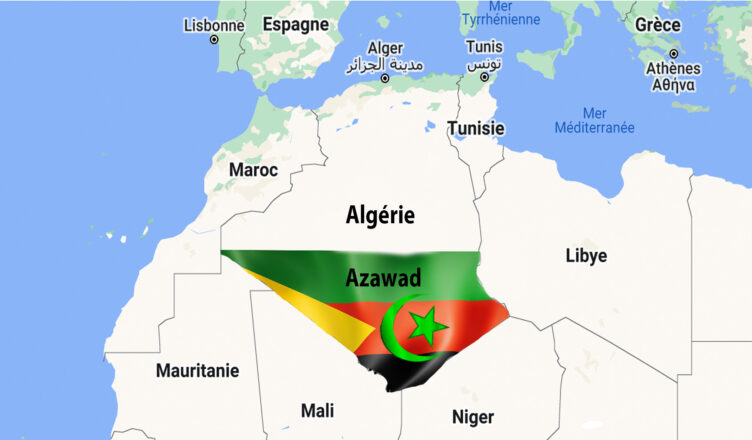
A coalition of fighters linked to Al-Qaeda and separatist groups from the Azawad Liberation Front (FLA) has carried out in Mali the largest coordinated attack in more than ten years, marking a new escalation in a region already among the most affected in the world by extremist violence.
The offensive, launched simultaneously over the weekend from military bases located in southern Algeria and northern Mali, targeted several strategic points across the country: Bamako airport, the Kati garrison, as well as towns in the north and center such as Kidal and Sévaré. No official toll has been released, but sources report the death of Mali’s Minister of Defense, killed in a car bomb attack.
The Azawad Liberation Front (FLA) claims to have taken control of Kidal, a highly strategic city that has been at the heart of Mali’s security crisis since its initial fall in 2012.
In this context of territorial occupation and weakening central institutions, observers believe that the continuation of these dynamics could increase the risk of a Libyan-style scenario, with a country divided into two parts—one in the north and the other in the south—as well as the danger of the creation of an Islamic state, or even a caliphate, facilitating the entrenchment of jihadist armed groups.
For more than a decade, the country has faced the presence of groups affiliated with Al-Qaeda and the Islamic State, as well as a Tuareg separatist rebellion. The group Jama’at Nusrat al-Islam wal-Muslimin (JNIM) has expanded its influence, recently going so far as to block fuel supplies to Bamako and multiplying attacks and kidnappings across the Sahel region.
In the north, the FLA and JNIM have already fought together despite their ideological differences, with a common objective: to push back the Malian army and its Russian allies from the center and north of the country.
After years of French and UN intervention, state control has weakened. The military juntas that came to power expelled these forces and turned to Russia, notably through the Africa Corps, deployed at around 2,000 personnel and now the main security partner of Bamako.
However, this support has not prevented new setbacks: the Africa Corps announced its withdrawal from Kidal shortly after its capture by the FLA, illustrating the fragility of the balance of power in the north of the country.