
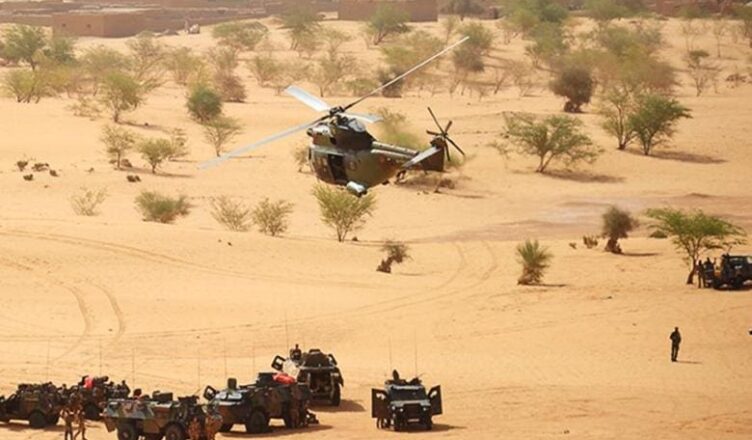
More than fifty people were killed on Wednesday in two nearly simultaneous terrorist attacks in central Mali, attributed to the jihadist group JNIM (Group for the Support of Islam and Muslims) and its ally, the Azawad Liberation Front, which are allegedly financed, equipped, and supported by the Algerian military regime, according to Western intelligence services.
An initial toll reported at least 35 deaths, including 25 in Kori Kori and 10 in Gomossogou, before other sources indicated that the total number of victims had exceeded fifty.
The attacks targeted several localities, where villages were also looted and homes set on fire. According to security sources, the victims reportedly included mainly members of self-defense militias, but also civilians, including teenagers and children.
JNIM claimed responsibility for the attacks, stating that it had targeted pro-government groups.
Regional authorities, including the governor of the Bandiagara region, Colonel-Major Olivier Diassana, strongly condemned the violence, describing it as “inhumane.”
The attacks come amid escalating insecurity in the center and north of the country, where local armed groups have organized themselves into self-defense militias such as Dan Nan Ambassagou, a group composed mainly of traditional Dogon hunters. The organization, officially dissolved by the authorities following accusations of massacres, remains at the center of intercommunal tensions.
According to several sources, Wednesday’s violence was carried out in retaliation for actions attributed to these militias. In the aftermath, villages were attacked and partially destroyed.
This new wave of violence follows a coordinated offensive launched in late April by JNIM and the Azawad Liberation Front rebellion, targeting several military positions and enabling the groups to strengthen their presence in certain northern areas.
In this tense climate, Malian authorities reaffirmed their position. Foreign Minister Abdoulaye Diop ruled out any possibility of dialogue with armed groups designated as terrorists, holding them responsible for the continuing violence.
Meanwhile, a blockade imposed around Bamako since April 30 continues to disrupt supply routes, worsening the difficulties faced by the landlocked country, which is heavily dependent on road imports.
According to analysts, as long as these terrorist groups continue to benefit from the support of General Saïd Chengriha’s military regime, the security situation is likely to keep deteriorating. Such a situation fuels instability, complicates efforts to combat armed violence, and weakens states across the Sahel region.