
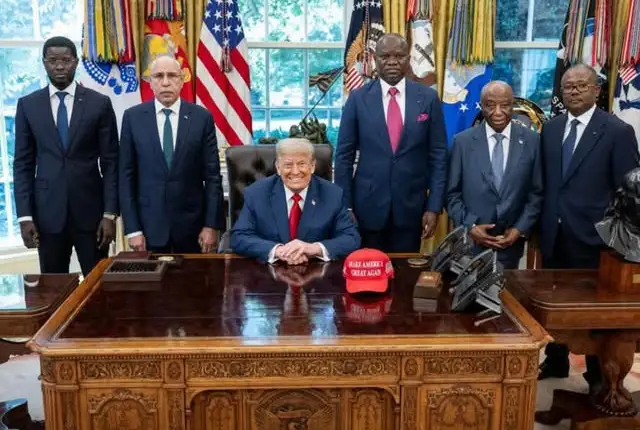
During his meeting in Washington with five African heads of state, U.S. President Donald Trump made his ambitions clear: to break with the logic of aid and prioritize a commercial approach in U.S.-Africa relations.
In response, the African leaders put strategic resources on the table, such as manganese, uranium, and lithium. The Senegalese president even attempted a more personal touch by inviting Trump to build a golf course in Senegal, banking on his well-known passion. Despite these gestures, there is widespread concern on the continent about this new American direction.
After drastically cutting foreign aid, notably by shutting down the USAID agency, which had distributed over 12 billion $ in humanitarian aid in 2024, the Trump administration is now promoting a “commercial diplomacy” strategy. Humanitarian aid is giving way to investment.
“This is now our official policy for Africa,” declared Troy Fitrell, the top U.S. diplomat for the continent, in May in Abidjan. From now on, ambassadors will be evaluated based on their ability to support local businesses, defend American commercial interests, and facilitate contract signings.
Africa currently represents less than 1% of U.S. foreign trade. But for Fitrell, it is “the world’s largest untapped market,” with a projected purchasing power of over \$16 trillion by 2050.
The Trump administration already claims results: 33 trade agreements totaling 6 billion $ signed in 100 days, with an additional 2.5 billion $ announced during the U.S.-Africa summit in June. The deals span sectors such as agri-food, energy, digital technology, and tourism across several African countries.
Still unresolved is the future of the AGOA (African Growth and Opportunity Act), which allows nearly 2,000 African products tax-free access to the U.S. market. The program is set to expire in September, and no renewal has yet been announced.