
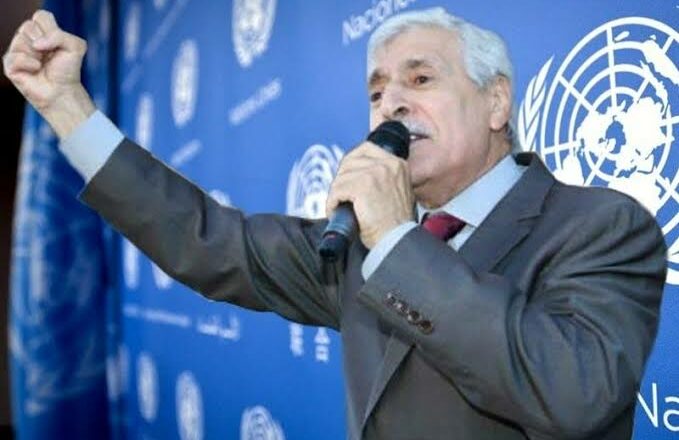
Three days of debates, expertise and diplomatic mobilization will be organized to make the voice of the Kabyle people heard among international public opinion and United Nations institutions.
According to a person close to President Ferhat Mehenni, the conference, which is being funded to the tune of more than 250,000 euros, would not be conceived as a simple activist gathering. It aims to become a forum bringing together different areas of expertise around a single question: securing recognition for Kabylia within the framework of international law and existing diplomatic mechanisms, and the Kabyle people’s demand to freely decide their future.
In an international context in which national claims, questions of self-determination and respect for the rights of peoples are occupying an increasingly prominent place in political and media debates, an international conference devoted to the political future of Kabylia and its right to self-determination will constitute a major gathering for supporters of Kabyle independence.
Scheduled to take place over three days in a major city outside France, the meeting would bring together around twenty political figures, former ambassadors, diplomats, academics, professors specializing in international relations and advanced strategic studies, as well as activists and representatives of organizations committed to the self-determination and independence of Kabylia.
The objective is clear: to bring the Kabyle question beyond the circle of activists and build a political, historical, legal and diplomatic case in order to be heard and understood by the international community.
The presence of former ambassadors and international relations specialists would in particular make it possible to analyze the mechanisms available to movements and their representatives claiming the right to self-determination.
Academics could also present papers devoted to the political history of Kabylia, the concepts of people, nation and self-determination, as well as international precedents that have led certain territories to obtain autonomy, political recognition or independence.
The challenge would be to move beyond statements of principle and present the international community with a reasoned, documented and understandable case for politicians, the media and international organizations.
The first day would focus on the history of Kabylia, its cultural and linguistic identity, its political evolution and the various stages that have shaped its relations with the Algerian central government.
Researchers, historians, academics and representatives of civil society could present their work and testimonies.
Significant attention could also be given to issues relating to civil liberties, human rights and allegations of repression made by Kabyle activists.
The objective would be to document the facts, present the various available sources and allow for a balanced and rigorous debate.
The second day would constitute the legal and diplomatic core of the conference.
Professors of international law, international relations specialists, former diplomats and strategic experts could examine in particular: the principle of self-determination of peoples; the various historical and contemporary precedents; United Nations mechanisms concerning peoples and territories claiming self-determination; possibilities for referring the issue to and raising awareness among international institutions; the role of states, regional organizations and civil society; and the political and diplomatic conditions necessary for an issue to emerge on the international agenda.
This day would also aim to respond to the main objections raised against the independence claim and present an argument based on law, diplomacy and universal principles, rather than confrontation.
The third day would focus on projecting the Kabyle question onto the international stage.
Politicians, diplomats, academics and representatives of independence organizations could consider the creation of a common communication and advocacy strategy.
Among the proposals that could be discussed would be the creation of an international advocacy committee for Kabylia, the establishment of a network of experts, the production of reports intended for international institutions, and the regular organization of meetings with parliamentarians, diplomats, academics, journalists and human rights organizations.
The conference could conclude with the adoption of an International Declaration on the right of the Kabyle people to self-determination, accompanied by a set of recommendations addressed to political and diplomatic actors.
For its organizers, the objective would not only be to bring together figures who already share the independence claim. It would also be to bring the debate to those who are not sufficiently familiar with the Kabyle question.
The conference will therefore be open to international journalists, researchers, representatives of non-governmental organizations, parliamentarians and diplomats.
Given the political sensitivity of the subject and the potential presence of high-profile figures, the conference should take place in a hotel establishment meeting high security standards, in an international city.
Security should nevertheless be conceived as a system for protecting participants and ensuring the smooth running of the discussions, in compliance with the laws of the host country and the principles of freedom of expression and assembly.
At the end of the three-day event, the organizers could officially transmit the conclusions of the conference to the relevant diplomatic representatives and appropriate United Nations mechanisms, within the limits of applicable procedures.
The message would be simple: the Kabyle question should not be ignored when a population claims the right to democratically determine its future.