
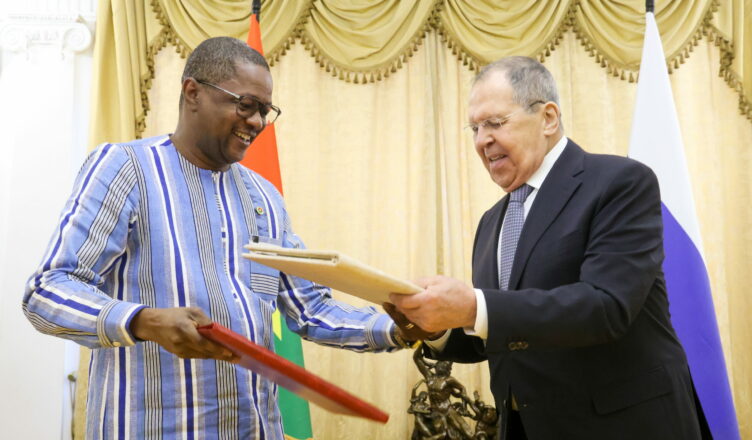
Burkina Faso and the Russian Federation took a new step in their diplomatic rapprochement by signing, on Thursday in Moscow, an agreement establishing the foundations of their bilateral relations. According to a diplomatic source in Ouagadougou, the text aims to give fresh momentum to cooperation between the two countries.
The document was signed by Burkina Faso’s Foreign Minister, Karamoko Jean Marie Traoré, and his Russian counterpart, Sergei Lavrov. According to a statement from the Burkinabè Ministry of Foreign Affairs, the agreement reflects the shared desire to further institutionalize the diplomatic rapprochement initiated in 2022.
For Karamoko Jean Marie Traoré, the text is “historic”, aligning with the vision of both heads of state and carrying the weight of a genuine framework agreement intended to replace the instrument that previously governed bilateral relations.
The Burkinabè minister emphasized that the document is not merely an update. It also serves as a strategic roadmap, defining priority areas of cooperation, working methods, and shared orientations between the two parties. The result of meticulous work, each wording was carefully crafted to produce a consensual text, paving the way for a new phase of collaboration marked by concrete projects.
On his part, Sergei Lavrov expressed full satisfaction, considering that the agreement embodies the two states’ commitment to building a solid, pragmatic, and exemplary partnership. He also reaffirmed Moscow’s support for Burkina Faso, particularly in the security sector, through technical assistance. According to him, the fight against terrorism in the Sahel remains a priority for his country.
The Russian foreign minister also praised the alignment of positions between the two nations and their mutual support in international forums, notably at the United Nations.
The signing took place during a working visit by the Burkinabè minister to Moscow, accompanied by representatives of the presidency and experts from the department responsible for foreign affairs. Additional legal agreements are expected to be concluded during this visit to further enhance the scope and content of bilateral cooperation.