
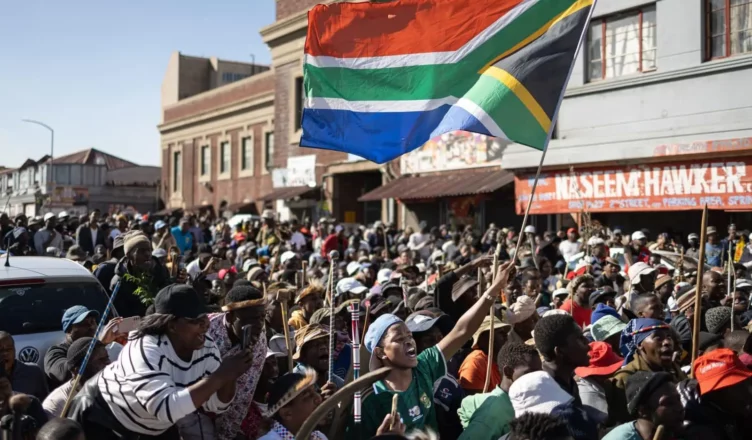
Dozens of people took part on Monday in a march against illegal immigration in the township of Kwa-Thema, near Johannesburg, one day after South African President Cyril Ramaphosa delivered a speech promising action against groups accused of fueling xenophobic tensions.
For several months, demonstrations targeting undocumented foreigners have been increasing across South Africa. Some self-defense groups have even issued an ultimatum demanding that undocumented migrants leave the country before June 30.
During the Kwa-Thema rally, protesters called for stricter border controls and rigorous enforcement of immigration laws. The march took place without any major incidents, although some participants carried signs expressing hostility toward foreigners. Similar actions were also reported in the Western Cape and Limpopo provinces.
In a televised address on Sunday, Cyril Ramaphosa acknowledged concerns related to illegal immigration while strongly condemning initiatives by groups seeking to take the law into their own hands. The head of state assured the public that authorities would act against any attempts to incite violence or disorder.
The organizers of the demonstrations welcomed the fact that the issue is now at the center of the national debate, while affirming their intention to continue their mobilization.
As the continent’s largest economy, South Africa is home to more than three million foreign nationals, representing approximately 5 percent of its population. In a context marked by an unemployment rate exceeding 30 percent, part of the population accuses immigrant workers of competing with South African citizens in the labor market.
The recent surge in violence has already claimed several victims, including at least two Mozambican nationals. Faced with growing insecurity, hundreds of foreigners have either left the country or sought refuge in certain cities. Several African states, including Ghana, Malawi, Mozambique, and Nigeria, have launched repatriation operations for their citizens.