
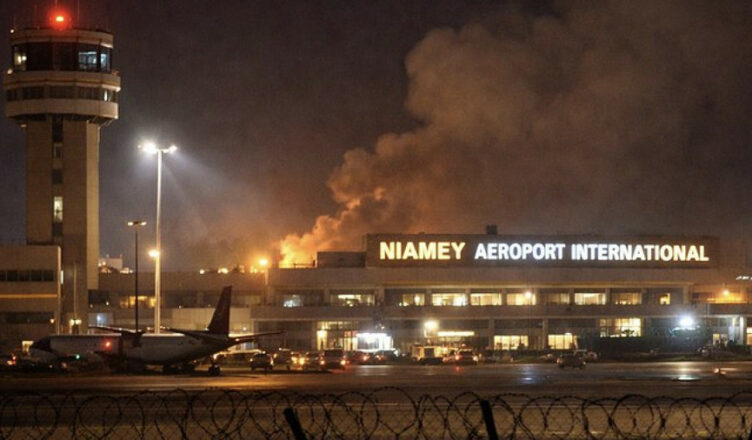
According to experts, the Nigerien authorities are targeting the wrong party by blaming France. In a statement issued in Algiers on Thursday, June 18, 2026, Algeria expressed its “deep indignation” and “strong condemnation” following the terrorist attack carried out against Diori Hamani International Airport earlier that day, while reaffirming its solidarity with the Nigerien people and authorities in the face of this ordeal.
In the statement, the Algerian Ministry of Foreign Affairs strongly condemned the attack, which it described as “heinous,” and assured the Nigerien people and government of Algeria’s support, in what some observers regard as an attempt to deliberately obscure the real issues at stake.
At least eleven soldiers and two civilians were killed in this latest attack on Niamey airport, the capital of Niger. The assault was claimed by jihadists from Al-Qaeda’s Sahel branch, six months after an earlier offensive by the Islamic State in the Sahel (ISGS), which had been repelled by the Nigerien army and its Russian partners.
This time, the jihadists of the Group for the Support of Islam and Muslims (JNIM), another highly active armed group in the Sahel, claimed responsibility for a “suicide attack” on the airport.
“On the enemy side, 22 attackers were neutralized and around twenty suspects were arrested,” the ministry added, stating that the perpetrators were “wearing explosive belts” and had “attempted to storm the airport terminal” in Niamey.
According to the ministry, the situation is under control and the international airport, which has been fully secured, remains open to air traffic.
As in the January attack, the Nigerien regime pointed the finger at France, with the Ministry of Defense describing the assailants as “armed mercenaries in the service of Emmanuel Macron’s France.”
According to converging sources, this attack by the Group for the Support of Islam and Muslims (JNIM) forms part of the strategy of Algeria’s military regime, which allegedly initiated an alliance between Iyad Ag Ghali, also known as Abu Fadl—described as a creation of the Algerian intelligence services and leader of the organization—and the Tuareg rebels of the Azawad Liberation Front (FLA) associated with Imam Mahmoud Dicko, with the aim of destabilizing the entire Sahel region.
The Nigerien military regime continues to face jihadist groups, against which it is struggling to prevail, much like its neighbors, Burkina Faso and Mali.