
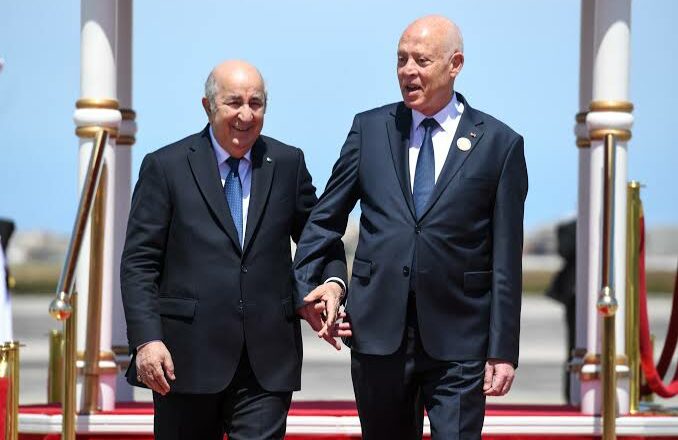
After Algeria’s diplomatic break with Abu Dhabi, could Tunis be the next capital to distance itself from the United Arab Emirates?
According to independent analysts, a range of indications is fueling this hypothesis, although no official decision by Tunisia to sever ties has been announced.
The question may seem premature. Yet the regional context, the growing rapprochement between Tunis and Algiers, and certain announcements made in Tunisia at the very moment Algeria announced its break with the United Arab Emirates provide grounds for speculation.
On September 10, Tunisian television devoted a program to the fight against drugs. At the heart of the debate was the intention to revise Tunisia’s drug legislation, in force since 1992, in order to strengthen the tools used to combat smuggling and dismantle organized crime networks.
Officially, this was a security-related issue, but the timing raises questions. The announcement came on the same day that Algiers decided to sever diplomatic relations with the United Arab Emirates.
Two announcements on the same day. Two statements focused, each in its own way, on security, transnational networks and the new tools being used by criminal organizations. A simple coincidence? Perhaps.
But in a region where diplomatic decisions are rarely isolated from their geopolitical environment, the timing cannot fail to attract attention. Since Kais Saied became president, relations between Tunisia and Algeria have strengthened considerably, particularly in the economic, energy and, above all, security fields.
According to intelligence and geopolitical experts, this closeness has led some to describe Tunisia as an “Algerian military province or region.” The expression is political and controversial, with no legal reality.
Nevertheless, it reflects a perception that is gaining ground: that Tunisia’s diplomatic choices are being dictated by Algeria.
The issue of the United Arab Emirates has for years played an important role in the political and economic balances of the Arab world.
The UAE has developed an active diplomatic presence in Africa, the Americas, Europe and the Middle East, multiplying partnerships across these regions.
However, the vision of President Abdelmadjid Tebboune and his military regime led by General Saïd Chengriha has become incomprehensible to diplomats in Algiers.
If Tunis were to decide to follow Algiers on this issue, the shift would be major and inevitable.
According to Western strategists, President Kais Saied’s policy is likely to be gradual: a cooling of relations, a review of certain partnerships, followed by positions on regional issues where Tunis and Abu Dhabi hold divergent views.
This is where the reform announced in Tunisia concerning drug trafficking and foreign interference takes on particular significance, potentially serving to legitimize a break with the United Arab Emirates and perhaps even with Morocco, a strategic ally of the United States and Israel.