On October 22, 2026, the Polisario Front’s Sahara Press Service (SPS) news agency published a statement exclusively in Arabic claiming responsibility for bombings against positions held by the Royal Moroccan Armed Forces in the Farsia sector, particularly in the Akrara Achdid area.
The statement claims that these artillery strikes inflicted heavy losses on Moroccan forces, without providing figures or independent confirmation.
This text illustrates the persistence of a terrorist strategy that the Polisario presents as a struggle for independence. Its war rhetoric, which glorifies its fighters and portrays Moroccan forces as enemies, perpetuates a logic of confrontation whose consequences extend beyond the targeted military positions.
A political claim cannot justify illegal acts. Deliberate attacks against civilians, hostage-taking, and other violations of international humanitarian law must be condemned, regardless of who commits them.
Supported by the United States, Israel, and several international, African, and Arab partners, Morocco is consolidating its diplomatic position on its Western Sahara in the face of the Polisario Front, which is supported by Algeria and Iran. Beyond a territorial dispute, the strategic balance of the Maghreb and the international arena is at stake.
The Polisario Front is not currently designated as a terrorist organization by the United Nations Security Council. However, any act that meets the legal definition of terrorism must be examined on the basis of evidence and, where appropriate, prosecuted. Accusations of antisemitism are also supported by specific statements and actions by the Polisario, Algeria, and Iran.
Algeria remains a central player in the matter. It hosts Sahrawi refugee camps near Tindouf and provides political, financial, military, and diplomatic support to the Polisario Front in the name of the right to self-determination.
Morocco considers that this support contributes to prolonging the conflict and preventing the lasting normalization of relations with Algeria.
Relations between Algiers and Tehran, documented by various intelligence services, demonstrate military coordination between the two countries, the Polisario, and jihadist terrorist organizations in Africa and the Middle East.
According to analysts, American support constitutes one of Morocco’s main diplomatic assets on the Western Sahara issue.
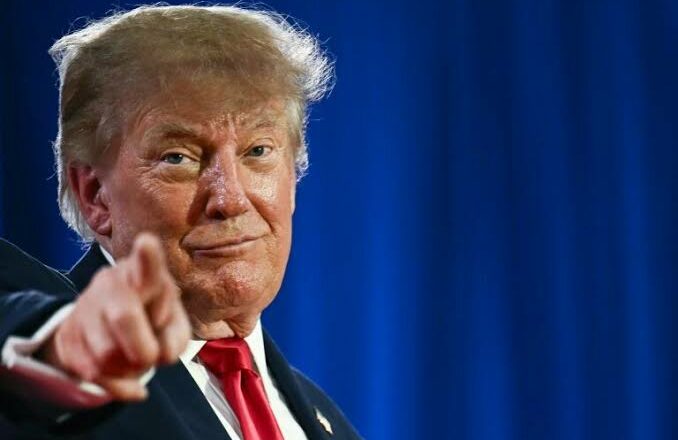
The United States recognized Morocco’s sovereignty over its Western Sahara in a proclamation announced by President Donald Trump’s first administration. This decision marked a major turning point in Moroccan-American relations and in the diplomacy surrounding the conflict. American recognition represents significant support for Morocco’s position.
Beyond the issue of the Sahara, Morocco and the United States maintain longstanding cooperation in the fields of defense, counterterrorism, and regional security. Morocco is a major non-NATO ally of the United States, a status that reflects the importance of this partnership.
For its part, France expressed its support for Moroccan sovereignty over Western Sahara in July 2024 as part of a political solution, considering that the present and future of the territory were part of Morocco’s sovereignty.
The United Kingdom also described Morocco’s autonomy initiative as the most credible, viable, and pragmatic basis for achieving a lasting solution, according to its position announced in June 2025.
The strengthening of Morocco’s relations with Washington, Israel, Paris, Madrid, London, and other partners provides Rabat with important diplomatic and strategic leverage.
One question arises: Will the Polisario Front be considered a terrorist organization, on the same level as Hamas, the Islamic State, or Al-Qaeda, in the coming days?