
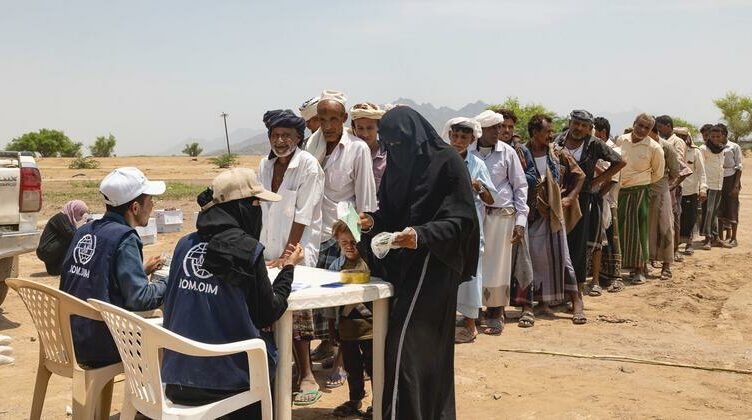
The resumption of fighting in Yemen has triggered a major population movement. More than 112,000 people have been displaced within the country since the fighting began, while nearly 3,000 Yemenis have reached Djibouti after crossing the Red Sea, the United Nations said on Friday.
According to the International Organization for Migration (IOM), most of the displacement has occurred over the past two weeks, particularly in western coastal areas as well as in the provinces of Taiz and Lahj.
“More than 112,000 people have been displaced,” said Abdusattor Esoev, head of the IOM mission in Yemen, speaking from Aden. The displacement comes as fighting between the Iran-backed Houthi rebels and pro-government forces has intensified since the beginning of September.
The Houthis also took control last week of several areas along the Red Sea coast, consolidating their presence near the strategic Bab el-Mandeb Strait, a major maritime route linking Europe and Asia through the Suez Canal.
Across the Red Sea, Djibouti is facing a new influx of refugees. Nearly 3,000 people arrived in the country in less than a week after making what was described as a particularly perilous sea crossing, according to Sandrine Desamours, a representative of the United Nations High Commissioner for Refugees (UNHCR).
The arrivals are increasing pressure on an already heavily stretched humanitarian system. Djibouti currently hosts around 36,000 refugees, mainly from Somalia and Ethiopia.
Similar movements, although still limited to a few hundred people, have also been reported in Somaliland and Puntland, where Yemenis and Somali refugees returning to their country have been recorded.
Yemen, one of the poorest countries on the Arabian Peninsula, remains deeply affected by the conflict that pitted the Houthis against Saudi Arabia-backed pro-government forces between 2014 and 2022. The war left hundreds of thousands dead and triggered a major humanitarian crisis.